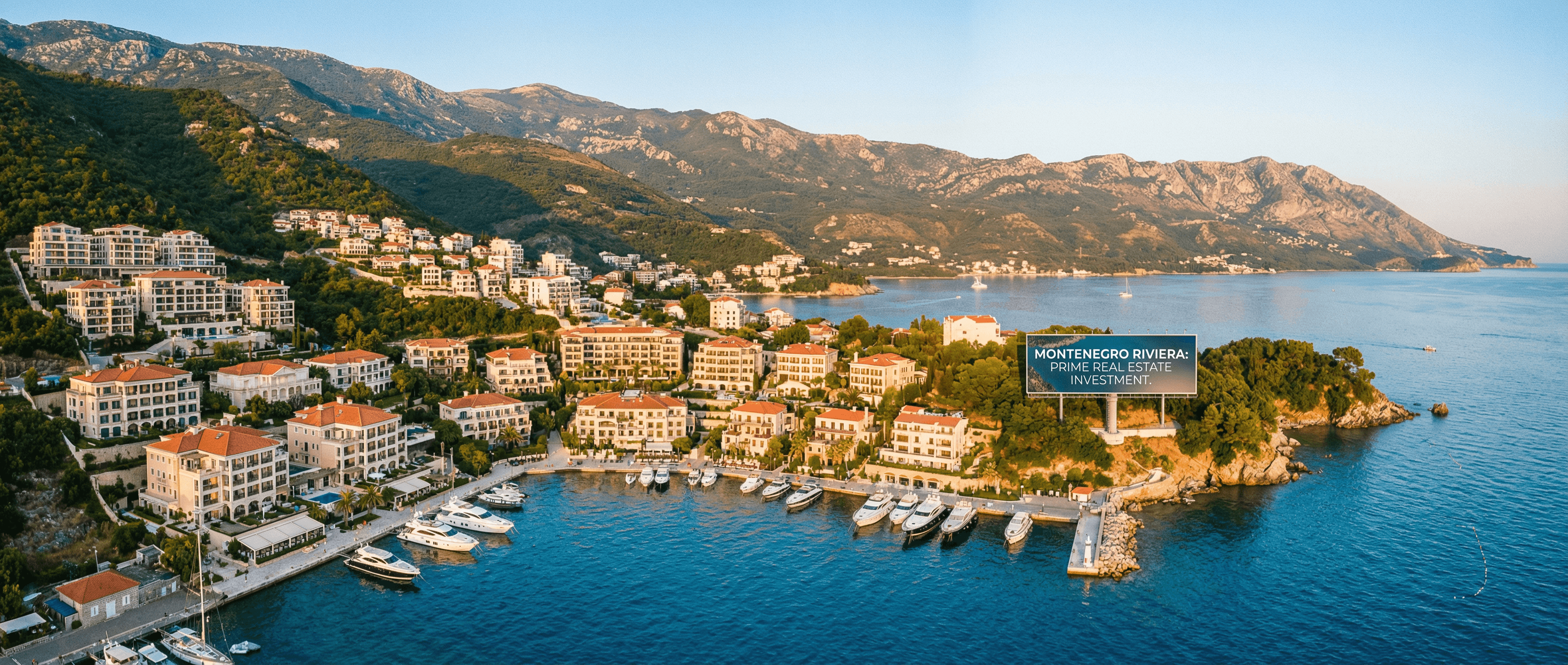
Bar is Montenegro's largest Adriatic port city and one of the most accessible, affordable, and fast-developing property markets on the coast — making it a strong choice for buyers seeking sea-view apartments, rental-yield investments, or long-term relocation.
Why Are Buyers Choosing Bar Over Other Coastal Towns?
Bar occupies a genuinely distinct position on the Montenegro coast. Unlike the already-saturated luxury markets of Budva or Kotor, Bar still offers entry points that suit a wider range of budgets, while the town's infrastructure — a working commercial port, a direct railway link to Belgrade, a regional airport at Tivat within easy driving distance, and a growing ferry connection to Bari in Italy — gives it practical advantages that pure resort towns cannot match.
The result is a dual market: local Montenegrin and regional Balkan buyers form a strong base, while an increasing number of Western European, Russian, and UK-based investors are drawn by comparatively lower prices per square metre and a longer-season rental demand driven by the university, the port economy, and year-round residents rather than just summer tourists.
What Types of Property Are Available in Bar?
Apartments and New-Build Developments
The bulk of buyer enquiries focus on apartments, and Bar delivers a broad spectrum. Older Yugoslav-era blocks near the seafront promenade offer lower entry costs and immediate rental income. Newer low-rise developments on the hillside slopes above the town — and along the Sutomore and Šušanj strips — provide contemporary finishes, sea views, and the kind of specification that attracts short-term rental guests.
New-build apartments from VAT-registered developers are subject to Montenegro's standard VAT rate on the first sale rather than the property transfer tax — the two taxes are mutually exclusive, so buyers always pay one or the other, never both. This distinction matters when comparing new versus resale pricing: make sure any quoted price clearly states whether VAT is included.
Houses and Villas
Semi-detached and detached houses sit predominantly in the residential districts around Stari Bar (the medieval old town set inland), in the villages climbing the slopes of Mount Rumija, and along the coastal strip toward Utjeha and Čanj. Villas with private pools and mature gardens represent a smaller but actively traded segment, typically sought by buyers planning personal use combined with premium summer letting.
Land Plots
Building land around Bar varies considerably in planning status and access. Urban plots within the municipal plan that carry confirmed construction permits are relatively straightforward to transact; agricultural or forest-classified land carries additional procedural steps. Always engage a licensed local lawyer to confirm the urbanistic status of any plot before signing a preliminary contract.
Commercial Property
Bar's port economy and the main pedestrian zone generate consistent demand for retail, office, and warehouse space. Investors targeting commercial property should factor in that rental yields and tenant stability here track the local economy rather than tourist seasonality.
What Do Properties in Bar Actually Cost?
Prices in Bar span a wide range depending on proximity to the seafront, build quality, floor, and view. As a general orientation:
- Older apartments in established residential blocks sit at the more accessible end of the market.
- New-build sea-view apartments command a meaningful premium over resale stock in the same neighbourhood.
- Houses with land vary most widely of all — condition, plot size, and location relative to the coast drive the spread.
Rather than quoting headline figures that date quickly, we recommend requesting a current comparable-sales report from our Bar specialists, who track active listings and closed transactions in real time.
What Taxes and Costs Does a Buyer Pay in Montenegro?
Montenegro's property purchase taxes have been progressive since the beginning of 2024. On resale (secondary market) purchases:
- 3% transfer tax on the portion of assessed value up to €150,000
- 5% on the portion between €150,000 and €500,000
- 6% on any portion above €500,000
The buyer pays this tax; it applies to the assessed value set by the tax authority, which may differ from the agreed purchase price.
For new-build first sales by a VAT-registered developer, VAT at the standard rate applies instead — there is no transfer tax on top.
Annual property tax is set by the municipality and sits within the band established under national law; the exact rate depends on the property's category and location within the Bar municipality.
Beyond taxes, buyers should budget for notary fees, lawyer fees, and any agency commission agreed in writing at the outset. Total acquisition costs above the purchase price typically run to several percentage points — your lawyer will provide a transaction-specific estimate once the purchase price and property type are confirmed.
Can Foreign Nationals Buy Property in Bar?
Yes. Montenegro operates an open property market for foreign individuals and foreign-registered companies with no blanket nationality restrictions on residential purchases. EU and non-EU citizens alike may buy apartments, houses, villas, and commercial units directly. Land transactions have historically required a Montenegrin-registered legal entity in certain categories, though the rules have evolved — confirm the current position with your lawyer for any plot purchase.
Foreign buyers typically follow this process: agree terms, instruct a local lawyer, conduct due diligence on title and encumbrances, sign a preliminary contract with a deposit, complete the notarised sales contract, register at the Real Estate Cadastre, and file the transfer tax return.
What Is the Rental Market Like in Bar?
Bar's rental market has two relatively distinct layers. Short-term holiday lets peak through summer and are concentrated near the beach at Šušanj and along the Rivijera Bar coastal strip. Long-term residential lets run year-round, supported by the university population, port workers, and a growing community of digital nomads and retirees who appreciate the town's amenities without Budva's prices.
Owners of well-presented one- and two-bedroom apartments with reliable Wi-Fi and air conditioning typically achieve strong summer occupancy, with long-term winter lets providing baseline income between seasons. Management companies and licensed local agents can handle bookings, check-ins, and maintenance for owners who are not locally resident.
What Should Buyers Watch Out For in Bar?
- Urbanistic status on older buildings: Some properties built before comprehensive planning registration may carry unresolved legalisation issues. Verify cadastre registration and building permits before exchanging.
- Assessed vs. agreed value: The tax authority may set an assessed value above the purchase price for transfer tax purposes. Understand this before finalising your offer.
- Sutomore vs. Bar town: These are distinct micro-markets within the same municipality. Sutomore is more resort-oriented; Bar town offers stronger year-round infrastructure.
- Currency: All property transactions in Montenegro are denominated in euros. There is no exchange-rate risk within the eurozone, though non-euro buyers should factor in conversion costs.
FAQ
Q: Do I need to be physically present in Montenegro to buy a property in Bar? A: Not necessarily. Many buyers complete the process via a notarised power of attorney that authorises a local lawyer to sign on their behalf. Your lawyer can prepare the POA documentation, which you sign in your home country before a local notary or at a Montenegrin consulate.
Q: Is Bar a good place for rental investment? A: Bar offers a dual rental stream — summer holiday lets and year-round residential tenancies — which can smooth income compared with purely seasonal resort markets. Returns depend on the specific property, its condition, management, and occupancy; speak with a local specialist for realistic projections.
Q: How long does a property purchase typically take from offer to registration? A: For a clean resale transaction with no title complications, the process commonly runs from several weeks to two to three months. New-build off-plan purchases follow a different timeline tied to construction milestones. Complex transactions involving land or multiple owners take longer.
Q: What is Old Bar (Stari Bar), and can I buy property there? A: Old Bar is a protected medieval settlement on the hillside above the modern town. The ruins themselves are a UNESCO-listed heritage area; residential and commercial property exists in the surrounding villages. Renovation projects in this area require heritage authority approvals alongside standard permits.
Q: Are there any restrictions on renting out a property I buy in Bar? A: Short-term rental activity must be registered with the local tourism authority, and rental income is taxable. The registration and compliance process is straightforward; your lawyer or a local property manager can guide you through it.
For current listings, market valuations, and legal referrals in Bar, contact our Montenegro property team directly.