The Bay of Kotor is one of Montenegro's most sought-after real estate markets, offering a rare combination of medieval architecture, Adriatic waterfront access, and relative affordability compared to Western European coastal destinations. Whether you are searching for a stone villa, a contemporary apartment, or a historic townhouse, the Bay rewards buyers who understand its distinct micro-markets and ownership rules.
What Makes the Bay of Kotor Different from Other Adriatic Markets?
Unlike the open beaches of Budva or Bar, the Bay of Kotor is an inland sea — a dramatic fjord-like inlet enclosed by limestone mountains. This geography creates a sheltered, year-round lifestyle that appeals as strongly to full-time residents as to seasonal holiday buyers.
Property here tends to be older in character: medieval stone houses in walled towns, renovated fishermen's cottages on the waterfront, and village homes on hillside terraces. New-build apartments do exist, but they are less dominant than in Budva, making authenticity and renovation potential key value drivers.
The Bay also sits partly within a UNESCO World Heritage buffer zone, which restricts some new construction and creates a degree of natural supply cap. That combination of limited supply, Adriatic access, and cultural heritage is why international buyers consistently target the area.
Key Towns and Their Real Estate Profiles
Kotor Old Town and the City Walls
The walled Old Town itself is among the most iconic addresses in the western Balkans. Properties inside the walls are almost exclusively historic stone buildings — many dating back centuries — that require expert renovation. Space is tight, parking is outside the walls, and tourist foot traffic is high in summer. Buyers here tend to be lifestyle purchasers or short-term rental investors who value UNESCO prestige over everyday convenience.
Prices in the Old Town reflect scarcity and demand: they sit at the upper end of the Montenegrin market, though still modest by Italian or Croatian Adriatic comparisons.
Dobrota and Muo
These are the quieter residential ribbons running north and south of Kotor town. Dobrota in particular is popular with expats and Montenegrin professionals who want easy access to Kotor without the tourist intensity. Waterfront stone houses here command significant premiums, while inland village properties offer more accessible entry points.
Perast
Perast is arguably the jewel of the Bay: a compact baroque village with palaces lining a curved waterfront, overlooking the twin islets of Our Lady of the Rocks and St George. Supply of properties in Perast is extremely limited. When buildings do come to market they attract serious buyers quickly. Restoration potential is high; rental income from tourism is also strong.
Tivat and Porto Montenegro
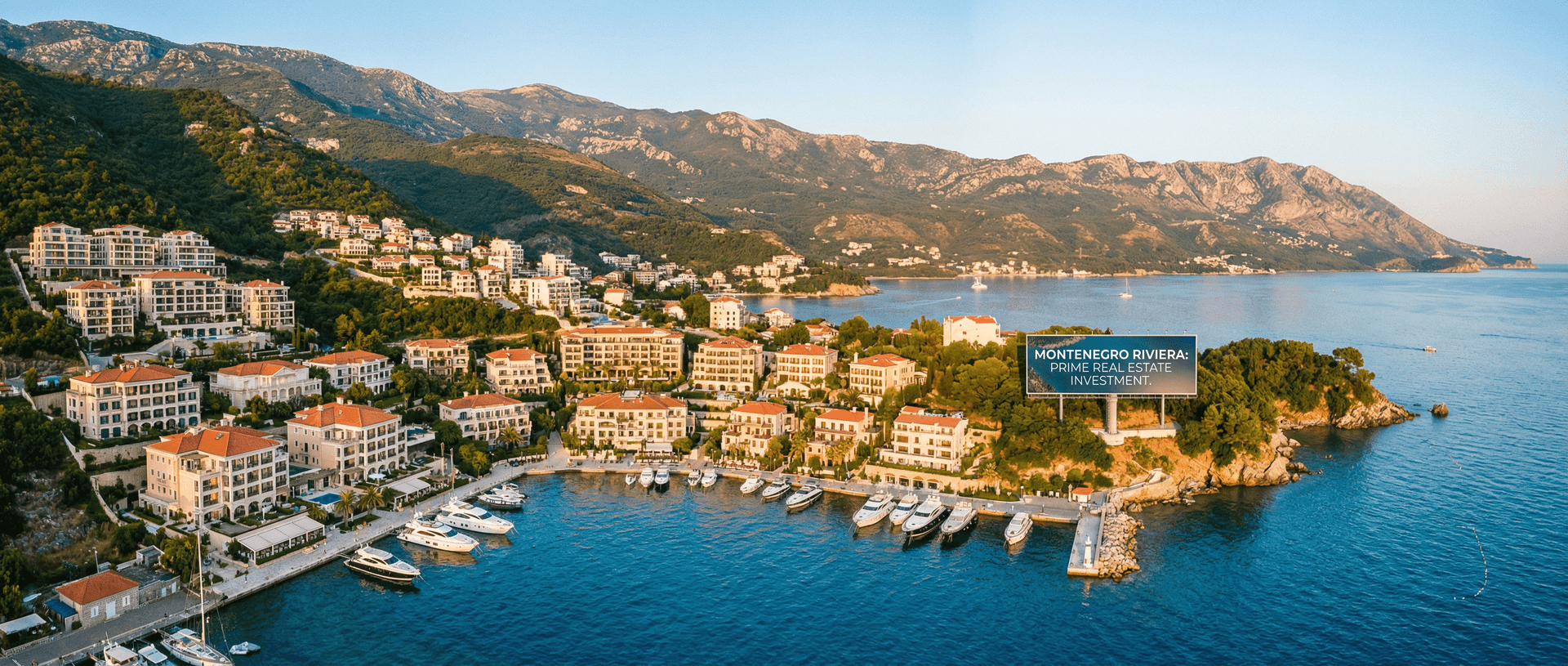
At the southern end of the Bay, Tivat hosts Porto Montenegro, a purpose-built superyacht marina and residential resort. This is the Bay's luxury new-build market: marina-facing apartments, branded residences, and hotel units with international management. Porto Montenegro targets buyers who prioritise turnkey quality, concierge services, and a cosmopolitan marina atmosphere. Prices per square metre here are among the highest in Montenegro.
Beyond the marina, ordinary Tivat offers more affordable apartments and houses with good connectivity via Tivat Airport.
Herceg Novi
At the entrance to the Bay, Herceg Novi has historically been overlooked relative to Kotor and Tivat but is growing in buyer interest. The town has a lively old town with Mediterranean character, warm winter temperatures (due to its sunny position), and a mix of socialist-era apartments, new builds, and stone houses. It is also well connected by ferry and road to Croatia's Dubrovnik region, appealing to buyers who want cross-border flexibility.
What Types of Property Can You Buy in the Bay of Kotor?
- Stone village houses — Typically older construction requiring renovation. Excellent for buyers who want authenticity and are willing to manage a restoration project.
- Waterfront apartments — Modern or renovated flats with sea views or direct water access, found mainly in Dobrota, Tivat, and Herceg Novi.
- Luxury villas — Standalone properties with pools and gardens on hillside or waterfront plots; limited in number and priced accordingly.
- Marina residences — Porto Montenegro and comparable marina-adjacent projects targeting yacht owners and global lifestyle buyers.
- Commercial property — Restaurants, boutique hotels, and guesthouses are actively traded, reflecting strong tourism demand.
Can Foreign Nationals Buy Property in the Bay of Kotor?
Yes. Montenegro's property ownership law is notably open: citizens of most countries may purchase residential and commercial real estate on the same legal basis as Montenegrin citizens. There are no general restrictions on foreign ownership of apartments, houses, or commercial buildings.
Agricultural land and forest land carry separate rules and are subject to additional restrictions for foreign buyers — consult a local lawyer before pursuing such plots.
The purchase process involves signing a preliminary agreement (predugovor), paying a deposit, conducting due diligence on title and encumbrances, then completing a sale contract (ugovor o kupoprodaji) before a notary. The buyer must subsequently register ownership at the Real Estate Cadastre.
What Taxes and Costs Apply to Buyers?
Montenegro applies different tax treatment depending on whether you buy on the secondary market or direct from a developer:
- Secondary market (resale): Transfer tax applies on a progressive scale based on the assessed value of the property. The rate increases at higher value bands. The buyer is responsible for payment.
- New-build (first sale by a VAT-registered developer): VAT at the standard rate applies instead of transfer tax — you do not pay both.
- Annual property tax: Set by each municipality; the rate is a percentage of assessed value and varies across towns in the Bay.
- Capital gains: If you later sell for a profit, gains are taxable. Montenegro also has personal income tax implications for rental income.
In addition to taxes, budget for notary fees, cadastre registration fees, and legal representation. Renovation projects will carry additional municipal permit costs depending on scope.
How Does the Bay of Kotor Perform as a Rental Investment?
The Bay of Kotor's tourism season runs from late spring through early autumn, peaking in July and August. Short-term rental demand is strong across all the key towns, with Kotor Old Town, Perast, and Porto Montenegro attracting the highest nightly rates due to their landmark appeal.
Rental yields vary considerably by property type, location, and quality of furnishing. Waterfront and view properties consistently outperform inland equivalents. Properties inside or adjacent to the Old Town can sustain very high occupancy during peak months but may see low bookings in winter — annual yield depends heavily on whether you target year-round tenants or seasonal short-term guests.
Herceg Novi, with its milder winters and growing profile, is showing an improving year-round occupancy pattern that appeals to investors seeking more balanced seasonal income.
What Are the Main Risks Buyers Should Know About?
Title and cadastre issues. Montenegro's land registry was established relatively recently, and some properties — particularly older village stone houses — carry unresolved inheritance lines, informal additions, or discrepancies between physical structure and registered documentation. Always commission a full title search through a qualified local lawyer.
Planning restrictions. The UNESCO buffer zone and coastal management legislation restrict what you can build, demolish, or add to structures in certain areas. Check planning status before committing to a renovation project.
Renovation scope. Stone house restoration can be expensive and slow. Reliable local contractors, material sourcing, and permit timelines all require planning beyond the purchase price.
Currency. Montenegro uses the euro, removing currency risk for eurozone buyers. Non-euro buyers should factor in exchange rate exposure over the ownership period.
FAQ: Bay of Kotor Real Estate
Q: Can EU citizens buy property in the Bay of Kotor without restrictions? A: Yes. EU citizens face no general restrictions on purchasing residential or commercial property in Montenegro. The process is the same as for other foreign nationals — standard due diligence, notary completion, and cadastre registration.
Q: Is it possible to get a mortgage in Montenegro as a foreign buyer? A: Some Montenegrin banks do offer mortgage products to non-residents, but conditions are more restrictive than for residents and loan-to-value ratios are typically conservative. Many international buyers fund purchases from equity or savings rather than local finance.
Q: What is the minimum price I should expect to pay for a property in the Bay of Kotor? A: Entry-level village properties requiring substantial renovation can be found at relatively modest prices, while waterfront or Old Town properties sit at the top of the Montenegrin market. The range is wide — working with a local agent to search within your specific budget and location criteria is the most practical approach.
Q: Are properties inside Kotor Old Town difficult to renovate? A: Yes — works within the walled Old Town require approval from heritage authorities, and materials and methods may be prescribed. Projects take longer and cost more than comparable renovations outside the heritage zone.
Q: Do I need a lawyer to buy property in Montenegro? A: It is strongly recommended. A qualified local lawyer protects you during due diligence, reviews the preliminary and sale contracts, checks the cadastre and encumbrances, and ensures the transfer is properly registered. Given the YMYL nature of a real estate transaction, independent legal advice is not optional.