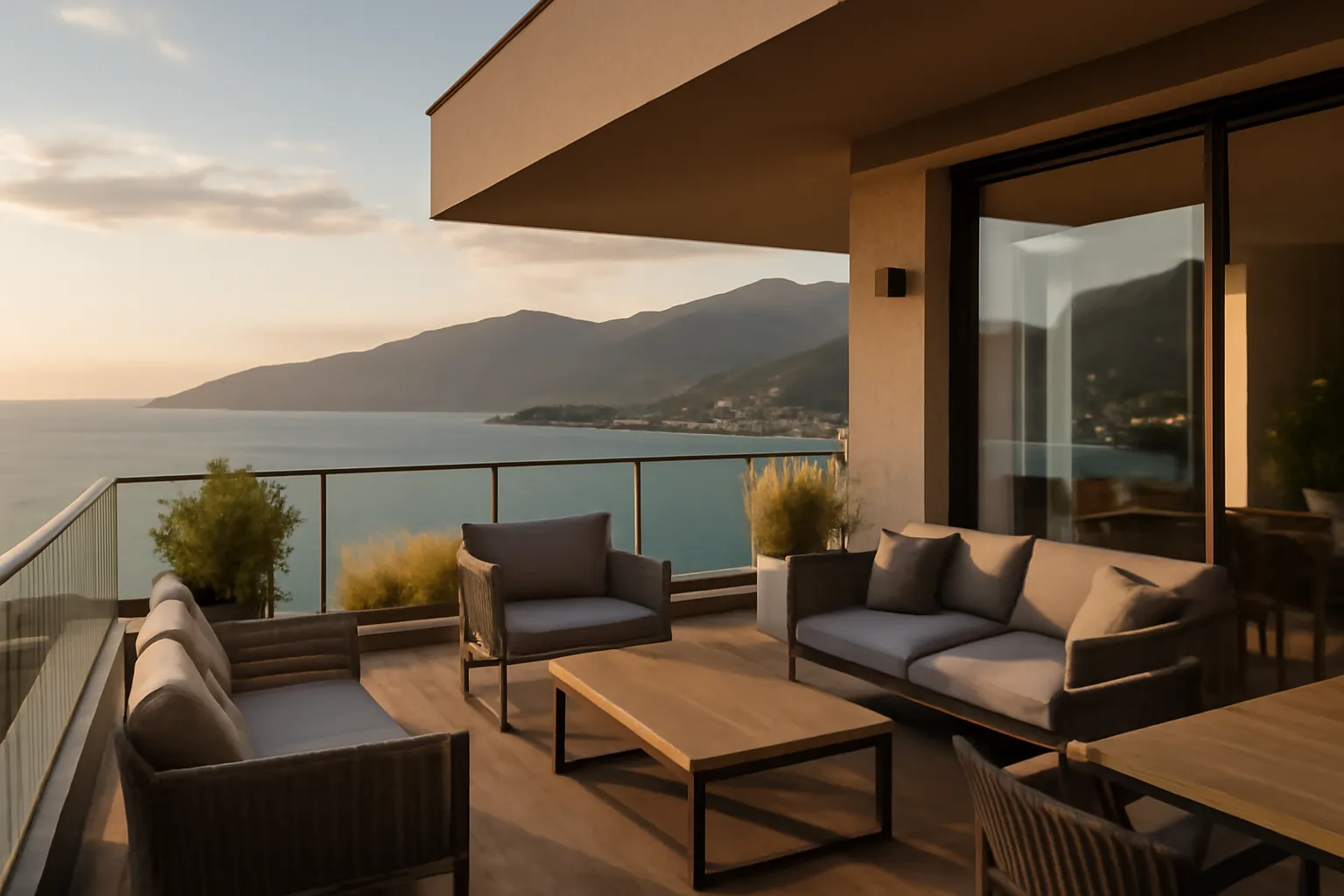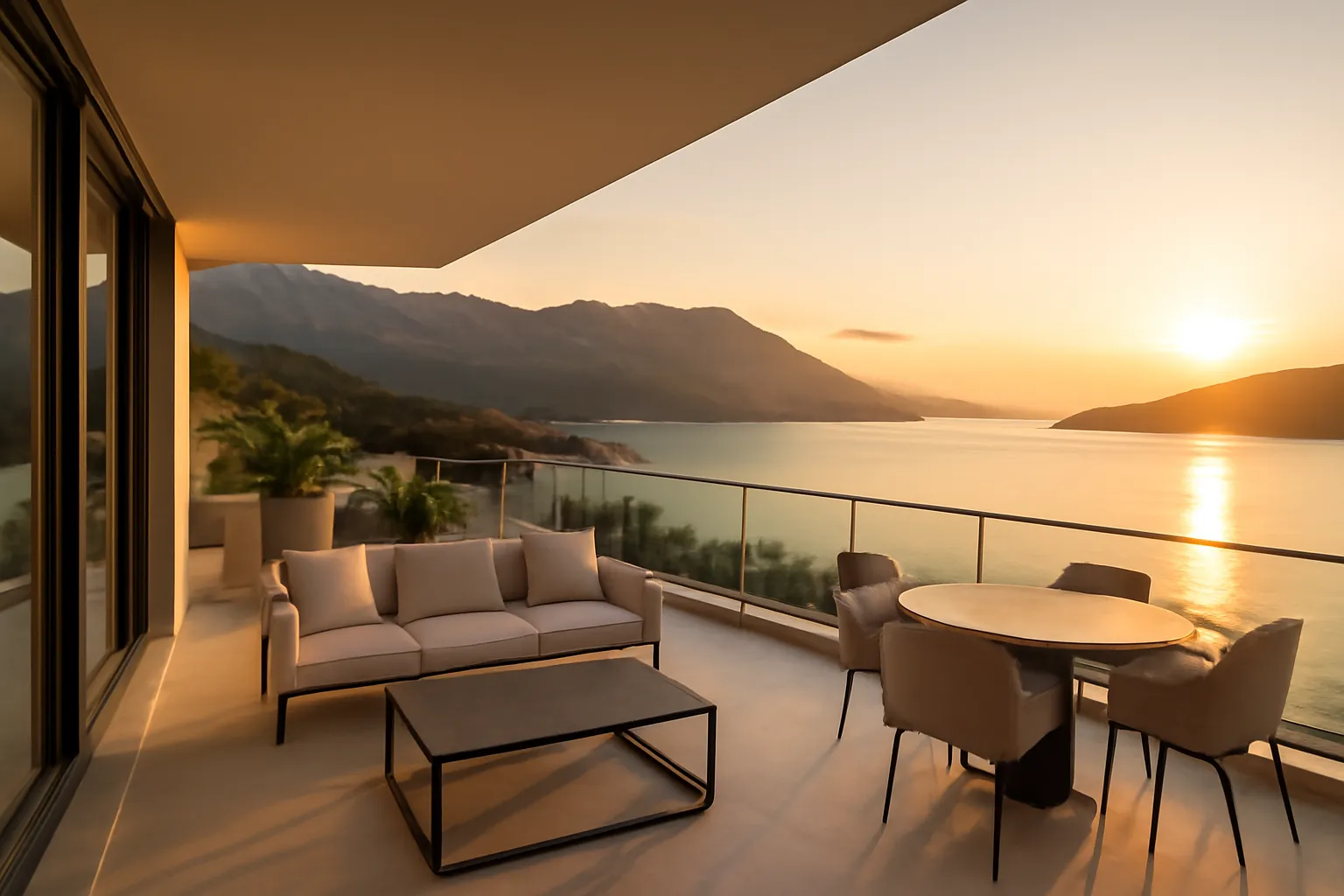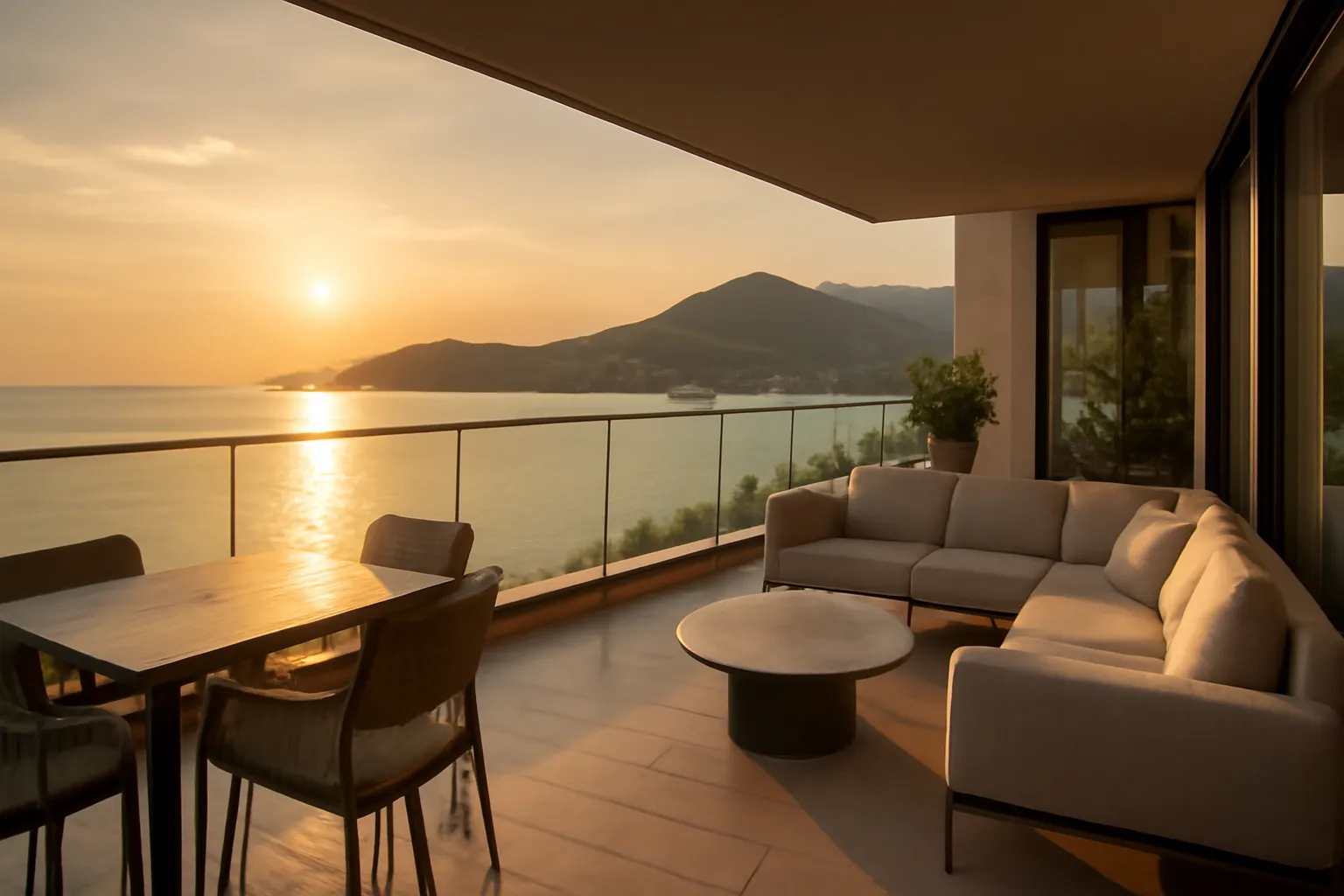
Montenegro grants foreign nationals a straightforward path to temporary residency through property ownership — making it one of the most accessible European residency routes available today. If you own real estate in Montenegro, you can apply for and renew a residence permit year after year, with no minimum-stay requirement attached to the property itself.
What Is Property-Based Residency in Montenegro?
Montenegro's Law on Foreigners allows non-EU nationals to obtain a temporary residence permit on the basis of owning real estate in the country. This is not a "golden visa" programme with a fixed investment threshold — it is a standard administrative residency category available to any foreigner who legally holds property in Montenegro.
Key facts at a glance:
- Type of permit: Temporary residence (privremeni boravak), typically issued for up to one year and renewable annually
- Minimum property value: No legislated minimum — ownership of any registered property qualifies
- Stay requirement: None linked to the property permit itself (though presence requirements apply when pursuing permanent residency later)
- Right to work: Not automatically included; a separate work permit is required
- Pathway to permanency: After five continuous years of temporary residence, you may apply for permanent residency
Why Buyers Choose Montenegro for Residency
Montenegro has become a genuine draw for international buyers seeking a foothold in Europe. Several factors combine to make the property-residency route attractive:
Geographical position and EU candidacy
Montenegro is an official EU candidate country with active accession negotiations under way. Residing here now positions holders favourably as the country's integration process advances.
Low cost of living and favourable tax environment
Montenegro operates a relatively low flat personal income tax, and the annual property tax rate set by municipalities is modest compared with Western European norms. For many buyers, living costs in cities like Budva, Kotor, or Podgorica are substantially lower than in equivalent European destinations.
No global income tax on foreign-sourced income for non-residents
Foreign-sourced income is generally not taxed in Montenegro if you are not carrying out economic activity within the country — though you should always confirm your specific tax position with a qualified local adviser.
Access to the Balkans and the Adriatic
The country offers visa-free or visa-on-arrival access to a broad range of countries, and its Adriatic coastline and mountain terrain make it an attractive base for remote workers, retirees, and investors alike.
Step-by-Step: How to Obtain Residency Through Property Purchase
Step 1 — Find and purchase property
The first step is acquiring a property and having the purchase contract and ownership (list nepokretnosti — property title extract) registered in the State Real Estate Cadastre (KATASTAR). This official record is the foundation of your residency application.
When buying, account for Montenegro's property transfer tax (applicable on secondary-market purchases) and, for new-build first sales, VAT at the standard rate. Never both simultaneously — it is one or the other depending on the transaction type.
Step 2 — Gather your documents
The core document set for a property-based temporary residence application typically includes:
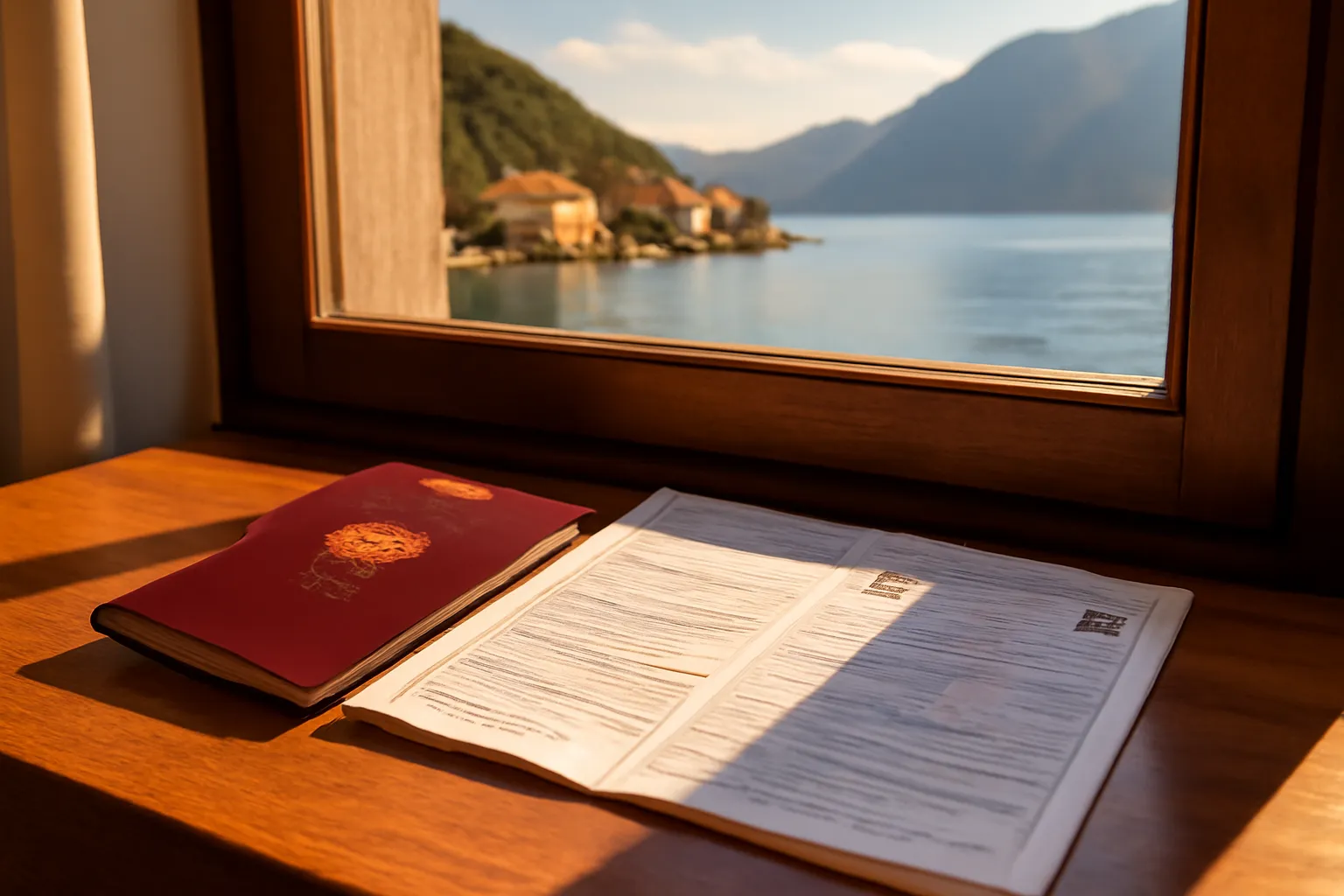
- Valid passport (with sufficient remaining validity)
- Proof of property ownership — certified extract from the Cadastre
- Proof of address in Montenegro (your owned property address)
- Health insurance certificate valid in Montenegro
- Proof of sufficient financial means to support yourself (bank statement or similar)
- Clean criminal record certificate from your country of citizenship, apostilled and translated
- Completed application form (submitted to the Ministry of Internal Affairs / Police Directorate)
Document requirements can be updated by administrative instruction, so confirm the current list with the relevant Police Directorate office or a licensed local lawyer before applying.
Step 3 — Submit the application
Applications are submitted in person at the Police Directorate (Uprava policije) office in the municipality where your property is located. You will be photographed and fingerprinted as part of the biometric registration process.
Processing times vary by office and season but are generally measured in weeks rather than months for straightforward cases.
Step 4 — Receive your residence card
Once approved, you receive a biometric residence card (boravišna karta) valid for the duration of the permit. This card functions as your primary ID for daily life in Montenegro — opening bank accounts, registering a vehicle, enrolling children in school, and so on.
Step 5 — Renew annually
Renewals follow the same general process — updated property title extract, refreshed insurance, and proof of means. As long as you own the property and meet supporting criteria, renewal is typically routine.
Property Ownership and the Path to Permanent Residency
Property-based temporary residency counts toward the five-year continuous residence required to apply for permanent residency (stalni boravak). Applicants for permanent residency must demonstrate that they have actually resided in Montenegro during this period — simply owning property and holding a permit without meaningful presence may be questioned.
After permanent residency, a further period opens the door to citizenship by naturalisation, subject to Montenegro's citizenship law requirements at the time of application.
Can EU Citizens Use the Same Route?
EU/EEA nationals have a separate, simpler registration process and are not required to hold a formal temporary residence permit in the same way as third-country nationals. If you are an EU citizen, confirm the current registration procedure with the relevant authority, as it differs from the process described above for non-EU buyers.
Common Questions Buyers Ask
Does any property type qualify?
Both residential and commercial properties can form the basis of a residency application, provided ownership is duly registered. Apartments, houses, villas, and land plots with registered ownership all qualify in principle. Unregistered or informally held properties will not support a valid application.
Can I include family members?
Immediate family members — spouse and dependent children — can typically apply for family reunification residence on the basis of the primary holder's permit. Each family member's application is assessed individually.
Is there a minimum value threshold?
Unlike formal investment migration programmes, Montenegro's property residency route has no legally fixed minimum purchase price. The key requirement is legal, registered ownership — not the monetary size of the transaction.
Do I need a local lawyer?
It is strongly advisable. A Montenegrin licensed lawyer can perform title due diligence, verify there are no encumbrances or disputes on the property, guide you through notarisation and Cadastre registration, and assist with the permit application itself. YMYL note: legal and tax advice specific to your situation must come from a licensed professional, not from this guide.
Does this permit allow me to work in Montenegro?
A temporary residence permit based on property ownership does not by itself authorise employment in Montenegro. If you intend to work, you will need to obtain the appropriate work permit or register business activity separately.
Frequently Asked Questions
Q: How long does the property-residency permit last, and how often must I renew it? A: The permit is generally issued for up to one year at a time and must be renewed annually. The renewal process is straightforward provided you still own the property and maintain supporting documents.
Q: Is there a minimum amount I must spend on a property to qualify? A: No. Montenegro's property-based residency has no legislated minimum investment amount. Legal, registered ownership of any qualifying property is sufficient.
Q: Will my property-based residency count toward future permanent residency? A: Yes. Years of temporary residence on any qualifying basis, including property ownership, count toward the five-year period required to apply for permanent residency — provided genuine residence is demonstrated.
Q: Can my spouse and children be included on my permit? A: Immediate family members can apply for family reunification residence based on the primary permit holder's status. Each application is processed individually and requires its own supporting documents.
Q: Do I need to live in Montenegro full-time while holding a property-based permit? A: The property permit itself carries no enforced minimum-stay requirement. However, to progress toward permanent residency you will need to demonstrate meaningful continuous residence over the required period.
Internal Resources to Explore
- Buying Property in Montenegro as a Foreigner — Complete Guide
- Montenegro Property Prices by Region
- Apartments for Sale in Budva
- Villas and Houses for Sale on the Montenegrin Coast
- Montenegro Property Tax Guide
This guide is for general informational purposes only. Laws and administrative procedures change. Always consult a licensed Montenegrin lawyer and a qualified tax adviser before making any investment or residency decision.