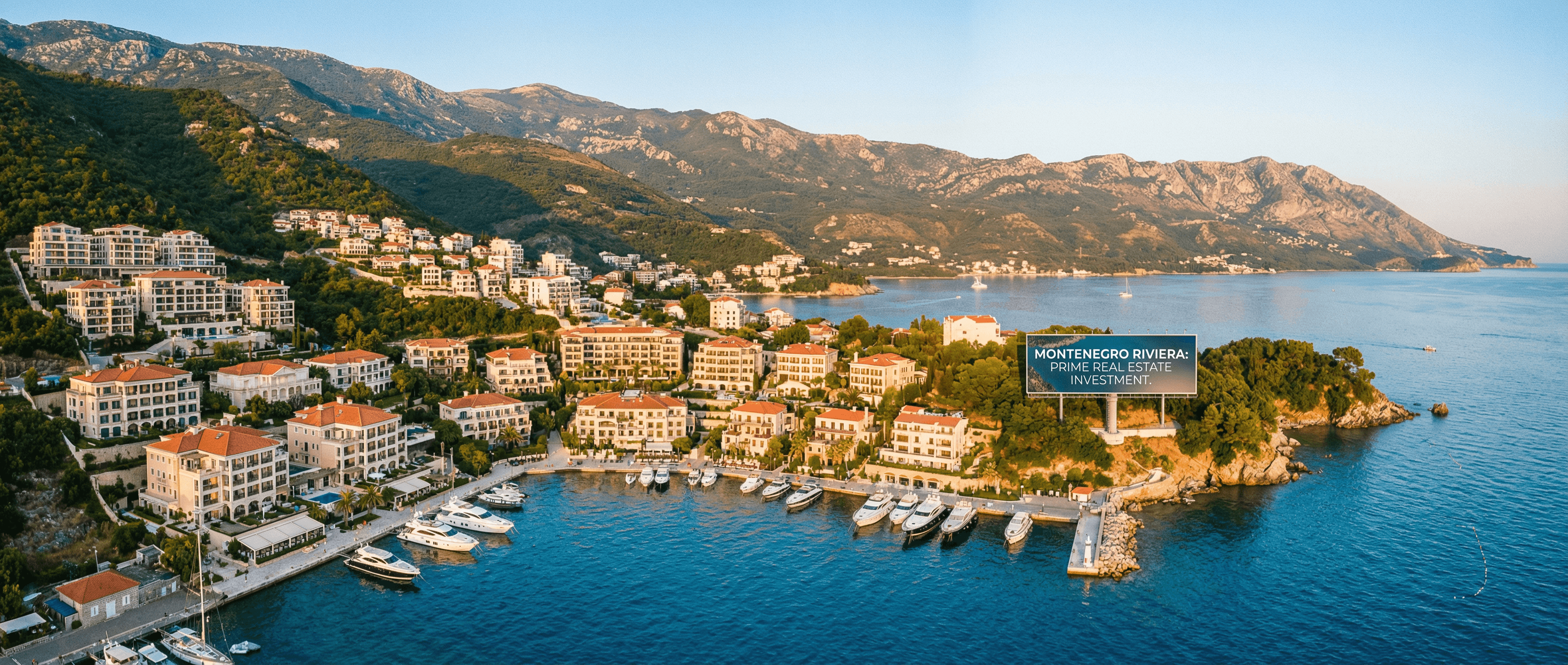
Herceg Novi is one of Montenegro's most accessible and scenically diverse property markets, offering buyers a genuine range of options — from compact Old Town apartments to waterfront villas on the Boka Bay — at price points that remain competitive compared with the Adriatic's more saturated destinations.
Why Herceg Novi Attracts International Buyers
Positioned at the entrance to Boka Bay, Herceg Novi combines dramatic mountain backdrop, mild Mediterranean climate, and direct road connections to Dubrovnik and Tivat Airport. That geography creates year-round livability, which distinguishes it from purely seasonal resorts further south. Buyers here tend to fall into one of three groups: those seeking a permanent residence with easy EU border access, investors targeting the growing short-term rental market, and retirees drawn by the mild winters and lower cost of living relative to Western Europe.
The city itself spans several distinct micro-markets — the fortified Old Town (Stari Grad), the coastal strip of Igalo known for its wellness heritage, the elevated hillside neighbourhoods of Bijela and Kumbor, and newer development nodes along the Zelenika waterfront. Each carries its own price dynamics, infrastructure maturity, and buyer profile.
What Types of Property Are Available?
Apartments in the Old Town and Igalo
Stone-built apartments in the Old Town are the most searched category on most Montenegro listing platforms. Units here are typically compact — studio to two-bedroom — with original architectural character that commands a premium over equivalent square footage elsewhere in the city. Igalo, immediately to the west, offers a broader mix of Soviet-era residential buildings undergoing renovation alongside newer boutique developments, generally at more accessible entry prices.
Villas and Houses on the Hillside
The terraced hillsides above the bay road offer detached villas and semi-detached houses with panoramic Boka Bay views. These properties vary considerably in condition: fully renovated turnkey homes sit alongside older structures requiring comprehensive refurbishment. Buyers willing to take on a project often find stronger value per square metre here, though renovation costs in Montenegro depend on scope and materials — always request itemised quotes from local contractors before budgeting.
New-Build Developments
Several residential complexes have launched in recent years, particularly around Zelenika and on the approach roads toward Tivat. New-build purchases from a VAT-registered developer attract VAT rather than property transfer tax — the two are mutually exclusive under Montenegrin law. This distinction matters at the offer stage, so confirm the developer's VAT status with your notary before signing.
Land Plots
Agricultural and construction land plots are available across the municipality, from small garden plots in established neighbourhoods to larger coastal parcels. Foreign buyers can purchase land in Montenegro without restriction, though zoning classification (urbanised vs. agricultural) determines what can be built and on what timeline. Always obtain a current urban planning extract (urbanistička suglasnost or lokacijska informacija) before committing.
Commercial Property
Herceg Novi's pedestrian zones and marina-adjacent streets attract interest from buyers seeking retail, hospitality, or office space. Liquidity in the commercial segment is thinner than residential, which means due diligence on rental demand and existing tenancy agreements is especially important.
How Does the Buying Process Work for Foreign Nationals?
Montenegro imposes no nationality-based restrictions on foreign property ownership. The transaction follows a standard sequence:
- Preliminary agreement (predugovor) — a deposit agreement, typically notarised, that locks in price and terms while due diligence completes.
- Title and encumbrance check — your lawyer or notary searches the cadastre (katastar) and land registry to confirm clear title, no mortgages, and correct ownership details.
- Main sale contract (ugovor o kupoprodaji) — signed before a notary; both parties or their authorised representatives must be present or provide power of attorney.
- Registration — the notary or buyer's lawyer files for ownership transfer in the immovable property registry.
- Tax filing — for secondary-market purchases, the buyer must file a property transfer tax return within a set window after the contract date.
Using an independent local lawyer (not one provided solely by the seller or developer) is strongly advised for any cross-border purchase.
What Are the Ongoing Costs of Owning Property in Herceg Novi?
Beyond the purchase price, budget for:
- Property transfer tax (secondary market): progressive rates apply — lower on purchases below €150,000, stepping up on higher values. Your notary will calculate the exact liability against the assessed value.
- Annual property tax: set by Herceg Novi municipality within the national band of 0.25–1% of assessed value per year.
- Utility connections and communal fees: vary by building and location; ask the current owner for recent utility bills.
- Notary and registration fees: modest relative to purchase price but confirm in advance.
- Legal fees: typically charged as a flat fee or percentage of transaction value — agree in writing before instruction.
Is Herceg Novi a Good Location for Rental Income?
The short-term rental market in Herceg Novi is active across a long shoulder season, supported by the bay's year-round mild climate. Properties in the Old Town, close to the waterfront promenade (šetalište), and with sea views tend to achieve the strongest occupancy rates. Igalo draws a separate segment of health-tourism visitors. Longer-term rentals appeal to workers commuting to Tivat's Porto Montenegro or to Dubrovnik, and to retirees who prefer annual tenancy arrangements.
Rental yields depend on property condition, management quality, and platform strategy — no single figure applies across the market. Engaging a local property management company for honest occupancy projections before purchase is a sound step.
Which Neighbourhoods Should Buyers Prioritise?
- Stari Grad (Old Town): highest desirability, tightest supply, strongest short-term rental premium; limited parking.
- Igalo: broader inventory, wellness tourism draw, good amenities; some buildings need investment.
- Zelenika / Kumbor: newer infrastructure, marina proximity, emerging development pipeline.
- Bijela hillside: panoramic views, quieter setting, suited to those prioritising space over walkability.
- Savina / Topla: residential feel, close to ferry terminal and city amenities, popular with longer-term residents.
Each neighbourhood suits a different buyer profile. Visiting in both peak summer and the off-season gives a realistic picture of daily livability.
FAQ
Can a non-EU citizen buy property in Herceg Novi? Yes. Montenegro does not restrict property ownership by nationality. Foreign buyers follow the same legal process as Montenegrin citizens, and ownership is registered in the national cadastre in the buyer's name.
Is a lawyer required, or can a notary handle everything? A notary authenticates and registers the contract but acts as a neutral party, not as your legal adviser. Engaging your own independent lawyer to conduct title due diligence, review contract terms, and advise on tax obligations is strongly recommended — especially for cross-border buyers unfamiliar with Montenegrin property law.
How long does the purchase process typically take? For a straightforward secondary-market transaction with clear title, the period from signed preliminary agreement to completed registration is commonly measured in weeks rather than months, though delays can arise if the cadastre records need correction or if the seller's documentation is incomplete.
Does buying property in Montenegro support a residency application? Property ownership can support a temporary residency application under Montenegrin immigration rules, though it does not automatically grant residency. Consult an immigration lawyer alongside your property lawyer if residency is part of your goal.
What due diligence checks are most important in Herceg Novi specifically? Verify that the property has a valid use permit (upotrebna dozvola), especially for older buildings or recent renovations. Check that communal areas and shared infrastructure are properly registered. For hillside properties, confirm there are no encumbrances related to agricultural land reclassification. These checks are standard practice but particularly relevant in a municipality where older building stock and complex cadastre histories are common.
This guide is for general information purposes. Property law, tax rates, and registration procedures can change. Always verify current rules with a qualified Montenegrin notary and independent legal adviser before transacting.