Montenegro offers foreign nationals a realistic, well-defined path to residency — and owning property is one of the most straightforward ways to begin that journey.
What Does Residency in Montenegro Actually Mean?
Montenegrin law distinguishes between temporary residency and permanent residency. Temporary residency is granted for periods tied to a qualifying reason — property ownership, employment, business registration, family reunification, or study. After holding continuous temporary residency for five years, you can apply for permanent residency. Permanent residency, in turn, is a stepping stone toward citizenship by naturalisation for those who want to go further.
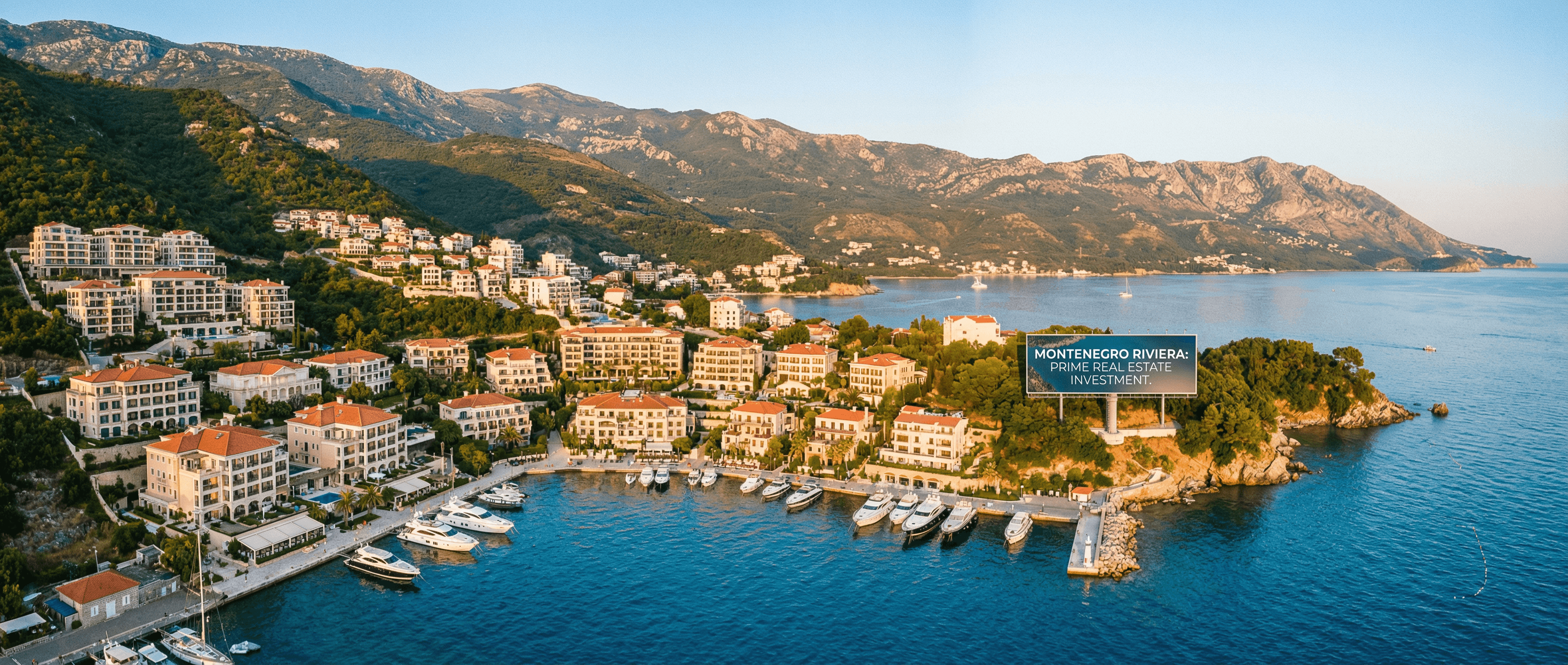
For most foreign buyers in Montenegro — whether purchasing an apartment on the Budva Riviera, a villa near Kotor, or a house in the mountains near Kolašin — temporary residency based on property ownership is the entry point.
Can Property Ownership Grant You Residency?
Yes. Montenegro law allows foreign nationals who own real estate in the country to apply for temporary residency on that basis. This is one of the most popular routes for buyers from Russia, Ukraine, Serbia, the UK, Germany, and across the wider European and CIS market.
Key points to understand:
- Ownership of residential property (apartment, house, or villa) qualifies as a basis for the application.
- You must present a valid title deed (list nepokretnosti) registered in the State Cadastre.
- The residency permit does not grant an automatic right to work — a separate work permit is needed if employment is the goal.
- Residency based on property ownership is renewable annually as long as you continue to own the property.
This route does not require you to spend a minimum number of days in Montenegro each year to keep the permit valid, though extended absences can affect later applications for permanent residency.
Step-by-Step: How to Apply for Temporary Residency
1. Purchase and Register Your Property
Before you apply, the property purchase must be complete and the title registered with the Real Estate Administration (Uprava za nekretnine). Your notarised sales contract and the cadastre extract (list nepokretnosti) are core documents in the residency application.
2. Gather Your Document Package
The standard document set includes:
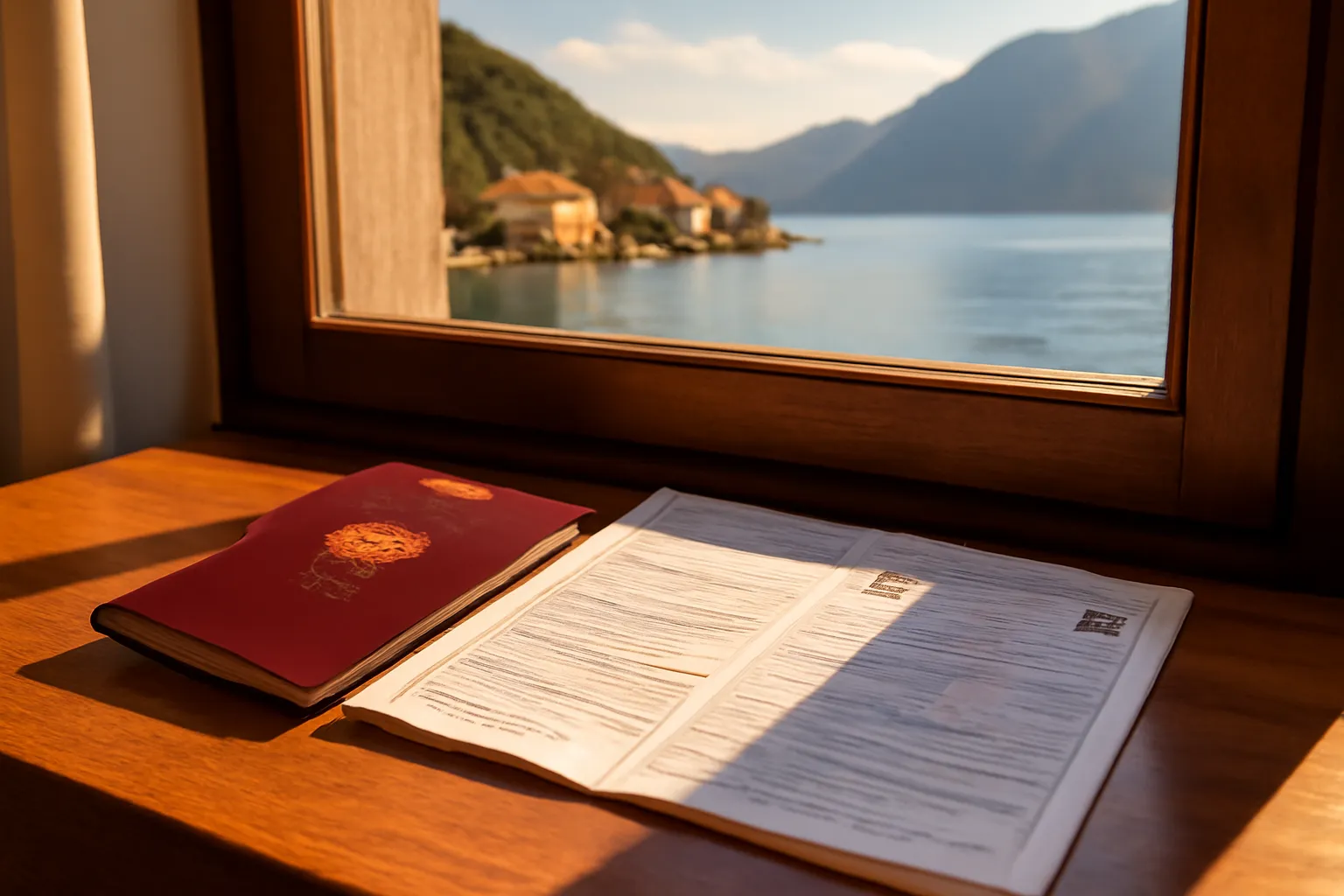
- Valid passport (and certified translation if required by the local police administration)
- Proof of property ownership — cadastre extract
- Proof of sufficient financial means (bank statement or equivalent)
- Health insurance valid in Montenegro
- Completed application form (Zahtjev za privremeni boravak)
- Recent passport photographs
- Proof of address in Montenegro (the property itself qualifies)
Requirements can be verified at the local police administration (Uprava policije) office in the municipality where your property is located, as officers may request additional documents depending on your nationality or circumstances.
3. Submit at the Local Police Administration
Applications are submitted in person at the police administration office (policijska uprava) in the municipality where you reside. In practice, this means the office covering Budva, Kotor, Tivat, Bar, Herceg Novi, Podgorica, or whichever area your property is in.
4. Biometric Registration
Once your application is approved, you will be issued a biometric residency card (boravišna karta). This card is the physical proof of your status and is required for many everyday transactions — opening a bank account, registering a vehicle, accessing healthcare, and more.
5. Annual Renewal
Temporary residency based on property ownership is typically issued for one year and renewed annually. Renewal follows a similar document process; as long as you still own the property and continue to meet the requirements, renewal is generally straightforward.
What Rights Does Residency Give You?
A Montenegrin temporary residency permit gives you the right to:
- Live in Montenegro without the need for repeated tourist-visa extensions
- Open a personal bank account with Montenegrin banks (many require residency)
- Access the healthcare system (usually through private or voluntary health insurance, supplemented by public access under certain conditions)
- Enrol children in local schools
- Drive with your foreign licence for a period before converting to a Montenegrin licence
- Own and register a vehicle
It does not automatically grant the right to work or operate a business — those require separate permits or company registration.
Business Registration as an Alternative Route
Foreign nationals who register a company (d.o.o. — društvo sa ograničenom odgovornošću) in Montenegro can apply for residency as a company founder or director. This is a popular route for entrepreneurs and digital professionals who want to combine a business presence with legal residency.
Montenegro's flat corporate tax rate and relatively low administrative overhead make this route attractive. Combining business registration with property ownership gives you a dual-basis residency that is considered more robust for long-term planning.
The Path to Permanent Residency and Citizenship
After five years of continuous legal temporary residency, you become eligible to apply for permanent residency. Continuous is the operative word: extended, unbroken periods outside Montenegro can interrupt the count.
After holding permanent residency for a further qualifying period, naturalisation (citizenship) may become possible, subject to language requirements, a clean criminal record, and demonstrated ties to Montenegro. Note that Montenegro's citizenship-by-investment programme (the CBI scheme) operated under separate rules and is no longer accepting new applications — the standard naturalisation route through residency remains the path for most foreign buyers.
Costs to Factor In
Residency applications themselves carry modest administrative fees set by the government — these are relatively low compared to similar programmes elsewhere in Europe. The real costs lie in:
- Legal and translation fees — engaging a local lawyer (advokat) for the application process is strongly recommended, particularly for first-time applicants unfamiliar with Montenegrin administrative procedure.
- Health insurance — a mandatory private policy costs vary by provider, coverage level, and age.
- Property ownership costs — annual property tax (porez na nepokretnost) is set by the municipality within a range of 0.25% to 1% of assessed value per year.
Request itemised quotes from local law firms; costs depend on complexity and the municipality involved.
Why Montenegro? The Property–Residency Connection
Montenegro's appeal for international buyers is rooted in a combination of factors: Adriatic and Bay of Kotor coastline, a growing tourist economy, EU accession negotiations underway, relatively accessible property prices compared to Western Mediterranean markets, and a residency framework that is transparent and achievable.
For buyers already considering purchasing a property in Montenegro, residency is not a separate ambition — it is a natural next step that unlocks the full value of ownership. Living legally in the country, banking locally, and building a five-year record toward permanent status all follow from that first title deed.
Frequently Asked Questions
Can I apply for residency before my property purchase is complete? No. The cadastre extract proving registered ownership is a required document. You must complete the purchase, have the title registered in your name, and then apply.
Do I need to speak Montenegrin to get residency? Not for temporary residency based on property ownership. Language requirements become relevant only at the naturalisation (citizenship) stage.
Can my family members get residency too? Yes. Spouse and dependent children can typically apply for family reunification residency once the principal applicant holds a valid permit. A local lawyer can guide you through the supporting documents required.
Is a lawyer required, or can I apply myself? Legally, you can apply yourself. In practice, engaging a local advokat saves significant time, avoids document errors, and is particularly valuable if your documents originate from countries whose translations need certified legalisation.
Does residency affect my tax status? Residency and tax residency are distinct. Spending more than a set number of days per year in Montenegro can trigger tax residency obligations under Montenegrin law. If you have existing tax residency elsewhere, seek advice from a cross-border tax adviser before spending extended periods in the country.