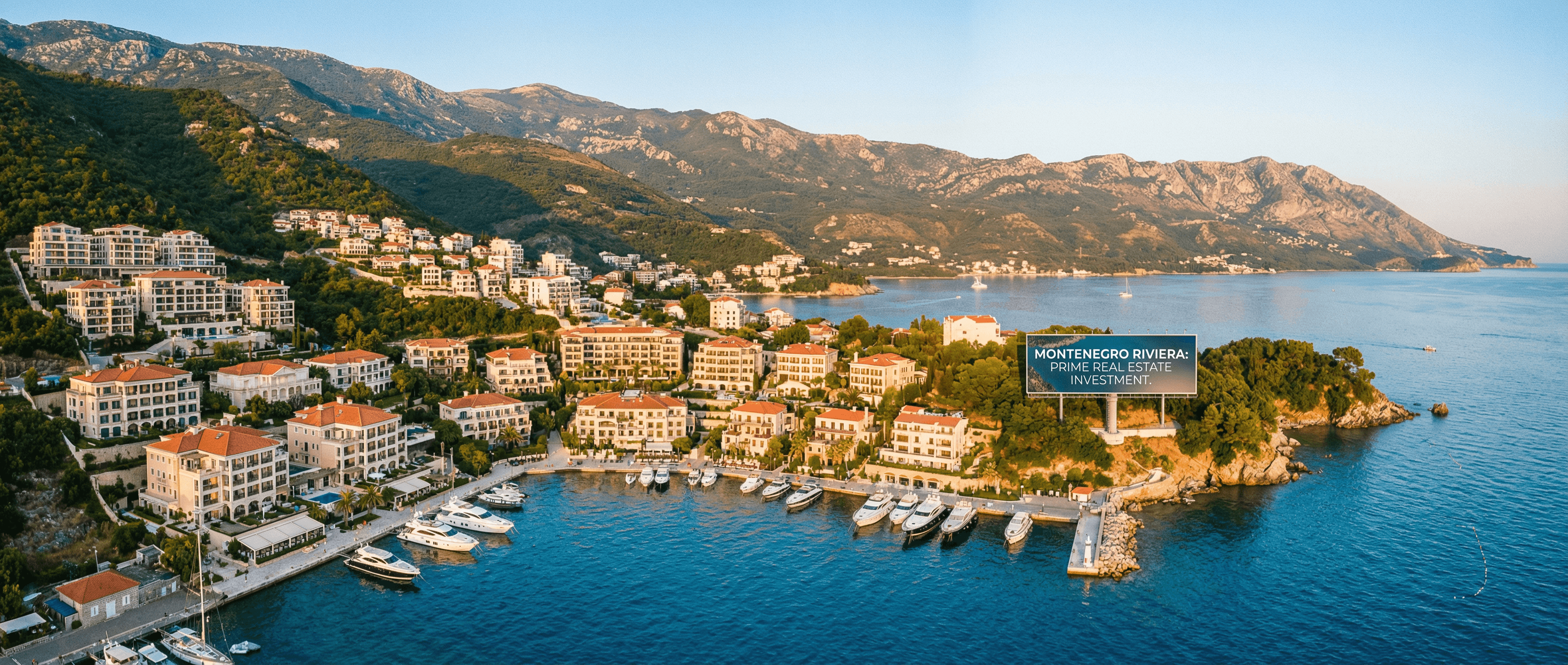
Finding the right property in Montenegro — whether you are relocating, investing, or searching for a holiday home — starts with choosing a trusted local partner. Top Estate is a Montenegro-based real estate marketplace and agency connecting buyers, sellers, and renters across the country's most sought-after destinations, from Budva's Adriatic coast to Podgorica's growing urban core.
What Is Top Estate and Who Is It For?
Top Estate is a full-service real estate platform specialising in Montenegro residential and commercial property. The platform serves four core audiences:
- International buyers researching Montenegro for the first time and navigating foreign-ownership rules, legal processes, and currency considerations
- Investors comparing rental-yield potential in coastal versus inland locations
- Expats and digital nomads looking for long-term rentals in liveable, well-connected areas
- Local sellers and landlords who want qualified, cross-border buyer reach
Whether you are searching for a beachfront apartment in Tivat, a stone villa on the Lustica Peninsula, agricultural land in the north, or commercial space in Bar, the inventory covers Montenegro's full geographic spread.
What Types of Property Can You Find?
Residential Sales
The residential sales catalogue includes:
- Apartments — studio to multi-bedroom units in new-build developments and resale buildings
- Houses and villas — detached and semi-detached, ranging from compact mountain cottages to luxury sea-view villas
- New-build developments — off-plan and recently completed projects from vetted developers
Long-Term and Short-Term Rentals
Montenegro's rental market splits clearly between long-term leases (typically unfurnished or part-furnished, favoured by residents and expats) and seasonal short-term lets (furnished, peak-season oriented). Top Estate lists both categories so renters can filter by duration, location, and budget.
Land and Commercial
- Residential land — plots with and without building permits, from small coastal plots to larger parcels suited for development
- Agricultural land — available across rural municipalities
- Commercial property — offices, retail units, warehouses, and hospitality venues (hotels, guesthouses, restaurant premises)
How Does the Buying Process Work in Montenegro?
Montenegro operates a civil-law property system with a transparent land register (katastar). Foreign nationals, including EU and non-EU citizens, can buy most residential and commercial property on the same legal footing as Montenegrin nationals, subject to specific rules for agricultural and protected land.
Typical Steps for a Purchase
- Property search and shortlisting — browse listings, attend viewings (in-person or virtual)
- Due diligence — verify ownership, encumbrances, building permits, and land-register status with a locally licensed attorney
- Preliminary contract (Predugovor) — a deposit (earnest payment) secures the property; if the seller withdraws, they typically return double the deposit
- Final notarised contract (Ugovor o kupoprodaji) — signed before a Montenegrin notary
- Transfer tax or VAT — buyer pays transfer tax on secondary-market purchases (progressive rate, dependent on assessed value); first sales by VAT-registered developers attract VAT instead
- Land-register transfer — the new ownership is registered at the cadastre
Working with a bilingual agent and an independent Montenegrin attorney for each transaction is strongly recommended — especially for cross-border buyers unfamiliar with local notarial practice.
Which Locations Does Top Estate Cover?
Budva Riviera
Budva remains Montenegro's most active real estate market. Coastal apartments and new-build complexes attract the strongest buyer interest, with demand from buyers across Central and Eastern Europe, the wider Mediterranean, and the Gulf states. The old town, Bečići, and Rafailovići are perennial hotspots.
Bay of Kotor
The bay — including Kotor, Tivat (home to Porto Montenegro), Herceg Novi, and Perast — appeals to buyers seeking UNESCO-listed medieval architecture, marina access, and a slower pace. Property here tends to be tighter in supply, which affects pricing.
Bar and the Southern Riviera
Bar offers more accessible price points than Budva while still providing Adriatic frontage, a major port, and a rail connection to Serbia. Ulcinj, at Montenegro's southern tip, is popular for sandy-beach access and growing tourism infrastructure.
Podgorica
The capital is Montenegro's primary commercial and residential rental hub. Long-term rental demand is driven by professionals, diplomatic staff, and the expanding business community. Commercial property investment — offices and retail — is concentrated here.
Northern Montenegro (Kolašin, Žabljak, Pljevlja)
The mountain regions attract a different buyer profile: ski-resort proximity (Kolašin 1450 / 1600), national-park access, eco-tourism, and significantly lower land and property prices relative to the coast. Investment thesis here centres on ski tourism and nature retreats rather than beach-holiday lets.
What Should Buyers Know About Costs and Taxes?
Beyond the purchase price, buyers should budget for the following:
- Transfer tax — progressive, applied to the assessed value on secondary-market transactions; new-build first sales by VAT-registered developers fall under VAT rules instead
- Notary and registration fees — set by regulation, typically modest relative to the purchase price
- Legal fees — engaging your own attorney is an additional but essential cost
- Annual property tax — set by the municipality; rates vary and are applied to the assessed value
- Agent commission — clarify whether the fee is buyer-paid, seller-paid, or shared before signing any engagement
Capital gains from the eventual resale of a property are subject to Montenegrin personal income tax rules. Tax treatment can differ for residents versus non-residents, and treaty relief may apply depending on your country of residence. Always seek advice from a Montenegrin tax professional and, where relevant, a tax advisor in your home jurisdiction.
How to Use Top Estate Effectively
Search Filters That Matter
Narrow your search early by:
- Property type (apartment / house / villa / land / commercial)
- Transaction type (buy / long-term rent / short-term rent)
- Location or municipality
- Price range
- Number of bedrooms and total area (m²)
- Sea view, pool, parking — amenity flags that affect both lifestyle and rental-yield potential
Saving and Comparing Listings
Create a saved-search alert to receive notifications when new listings matching your criteria are published. Montenegro's most desirable coastal properties at competitive prices move quickly in peak season.
Contacting an Agent
Each listing shows direct contact details for the responsible agent. For cross-border buyers, initial enquiries by email or WhatsApp are common; video viewings can often be arranged before committing to travel.
Frequently Asked Questions
Can a foreigner buy property in Montenegro?
Yes. Foreign nationals from most countries can purchase residential and commercial property in Montenegro on terms broadly equivalent to those for local buyers. Restrictions apply to certain categories of land (agricultural, forest, and some protected areas), so due diligence on land classification is essential before any purchase.
Is Montenegro in the EU?
Montenegro is an EU candidate country and has been progressing through the accession process. It already uses the euro as its currency, which simplifies transactions for European buyers and reduces currency-exchange risk.
What is the typical timeline from offer to completion?
Timelines vary by transaction complexity. A straightforward resale apartment with no title issues can complete in a matter of weeks once the preliminary contract is signed. Transactions involving land-use changes, inheritance resolution, or complex development structures take considerably longer.
Do I need a Montenegrin bank account to buy property?
While not always a legal requirement, having a local bank account simplifies payment transfers and is required for some administrative steps, including certain tax payments and utility registration. Opening a non-resident account at a Montenegrin bank is a common early step for foreign buyers.
What ongoing costs should I expect as an owner?
Ongoing ownership costs include annual property tax (municipality-dependent), utility charges (electricity, water, communal fees where applicable), property management fees if you are renting the property remotely, and any homeowners' association or building maintenance charges in apartment developments.