Explore apartments, villas and new-build developments for sale in Budva, Montenegro. Understand the buying process, costs, neighbourhoods and rental potential.
Budva is Montenegro's most active property market, where Adriatic seafront apartments, old-town character studios, and hillside villas draw international buyers year-round. Whether you are looking for a holiday retreat, a rental-income asset, or a permanent coastal residence, Budva consistently offers the widest choice of listings and the most liquid resale market in the country.
Why Do Buyers Choose Budva?
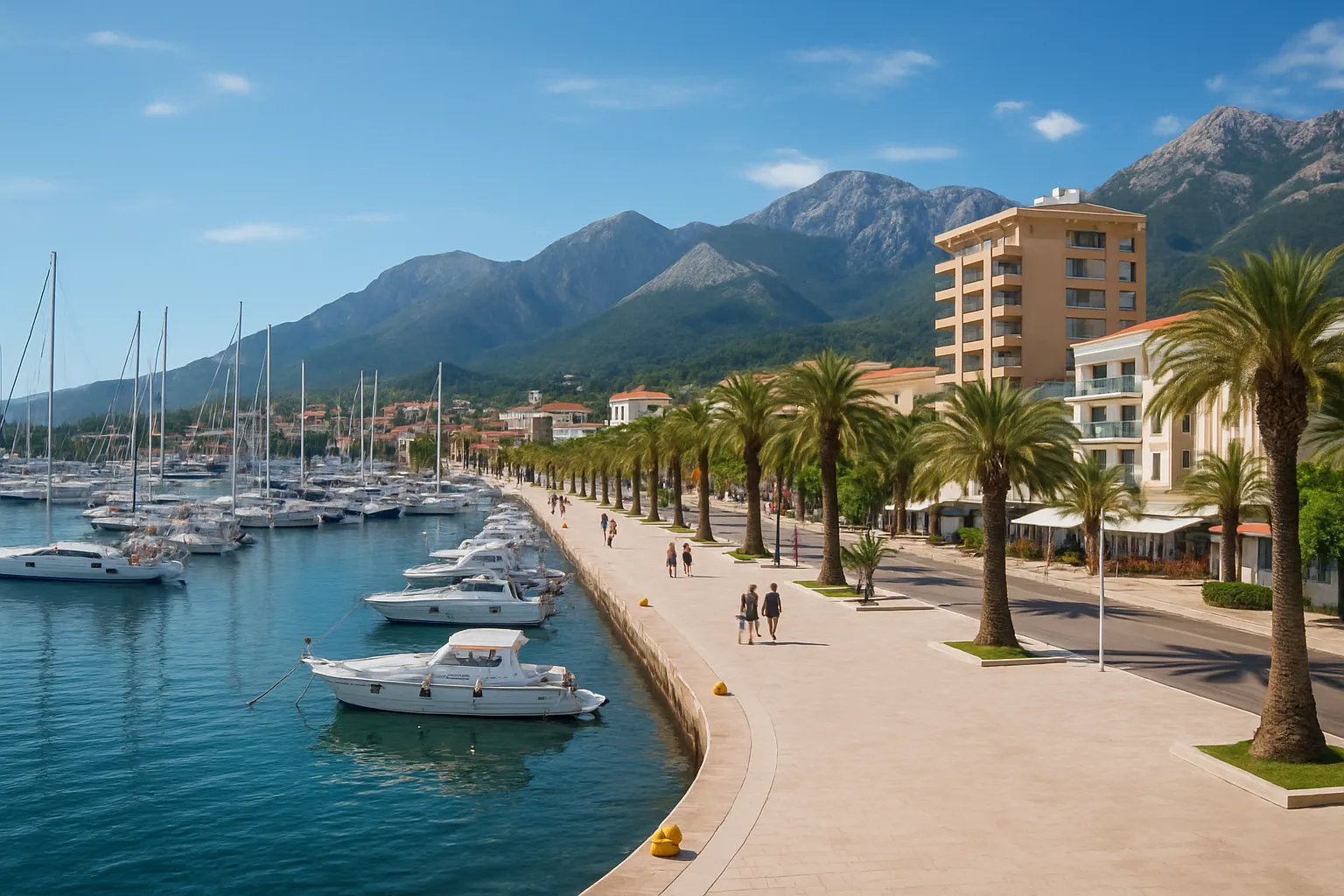
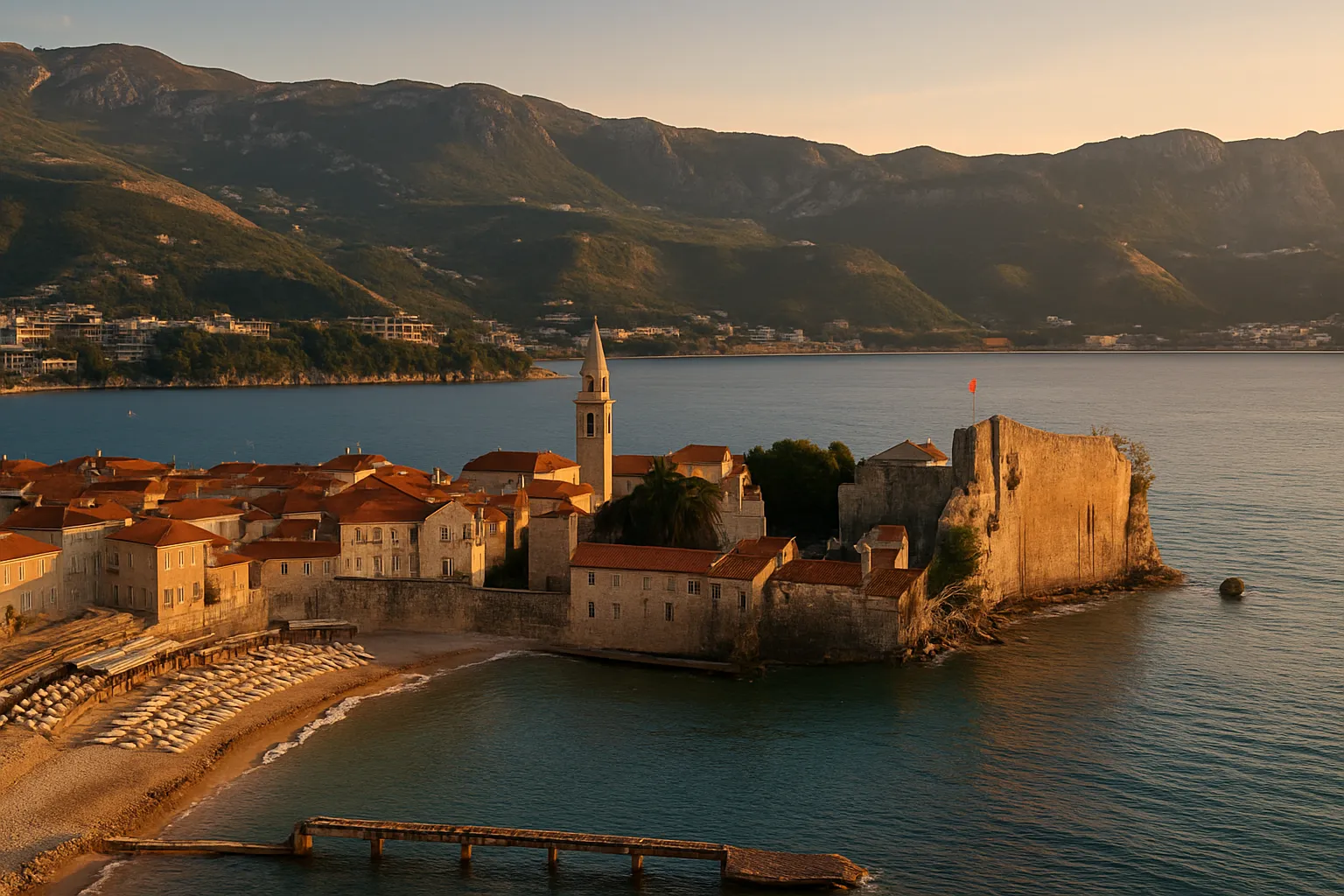
Budva sits at the geographic and commercial heart of the Montenegrin Riviera. The medieval Old Town, a string of sandy beaches — Mogren, Slovenska Plaza, Jaz — and a well-developed hospitality scene combine to make it the most recognisable address in Montenegro for overseas buyers.
Practical advantages reinforce the lifestyle appeal:
- Year-round accessibility. Tivat Airport is roughly 30 minutes by road; Podgorica Airport offers additional connections. Improved highway links have cut drive times across the region.
- Strong short-term rental demand. The coastal season drives consistent occupancy for well-located apartments, making Budva attractive to buy-to-let investors alongside holiday-home buyers.
- Established expat and investor community. Legal, banking, and property-management services catering to foreign buyers are easier to find in Budva than almost anywhere else in Montenegro.
- Variety of price points. From compact studios in residential neighbourhoods to penthouse duplexes overlooking the Adriatic, the range suits different budgets and strategies.
What Types of Property Are Available in Budva?
Seafront and Beachside Apartments
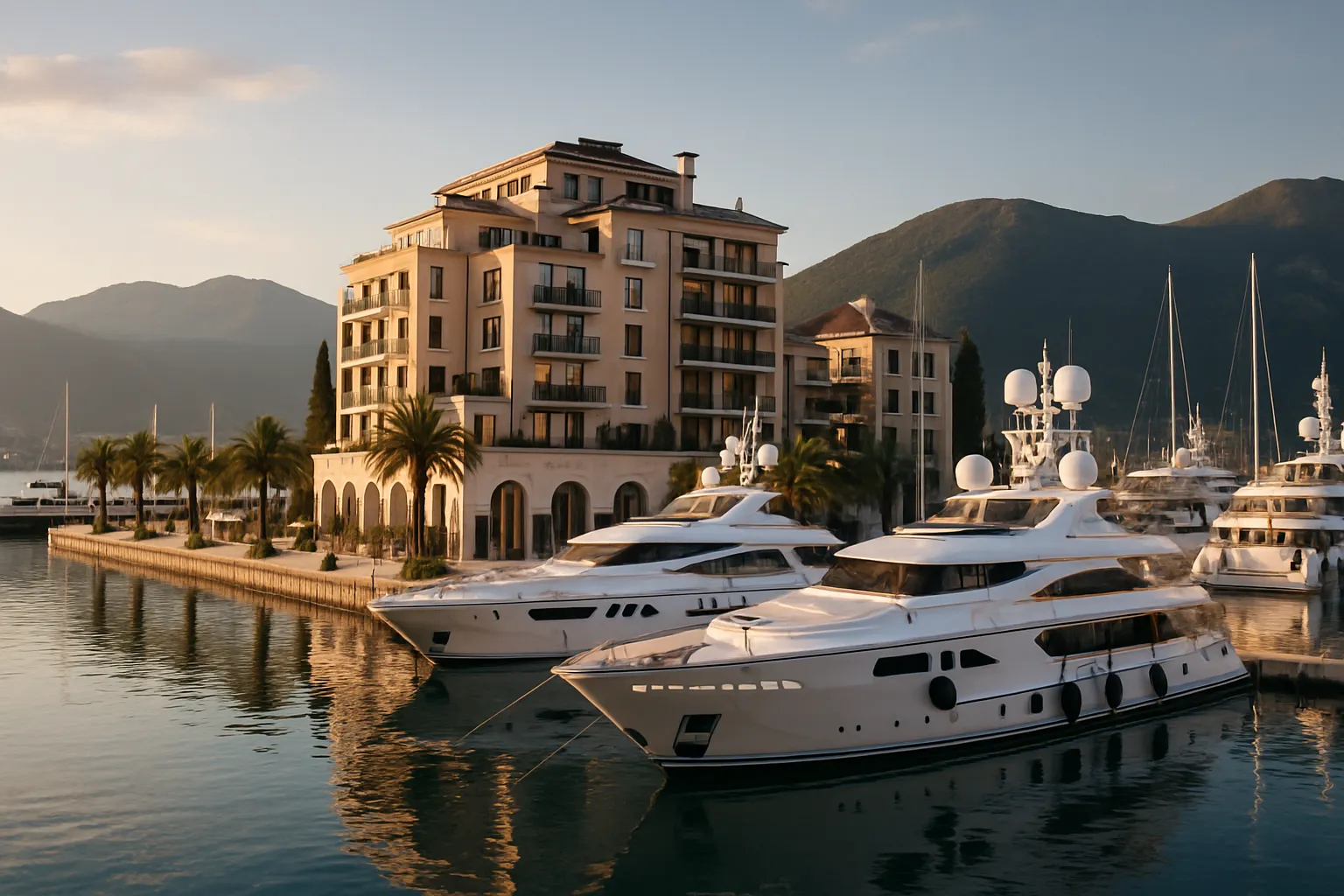
The most sought-after — and most competitive — segment. Buildings within walking distance of Slovenska Plaza or with direct sea views command premium asking prices. New-build complexes with pools, concierge services, and underground parking are common in this tier. Buyers should plan for higher price-per-square-metre figures and act quickly when quality units appear.
Old Town Studios and Character Apartments
The medieval walled city (Stari Grad) contains a small stock of stone-built apartments, many with terraces overlooking terracotta rooftops or the harbour. Supply is limited by the conservation area's boundaries, which keeps values stable and makes genuine Old Town addresses relatively rare.
Hillside Villas and Residential Homes
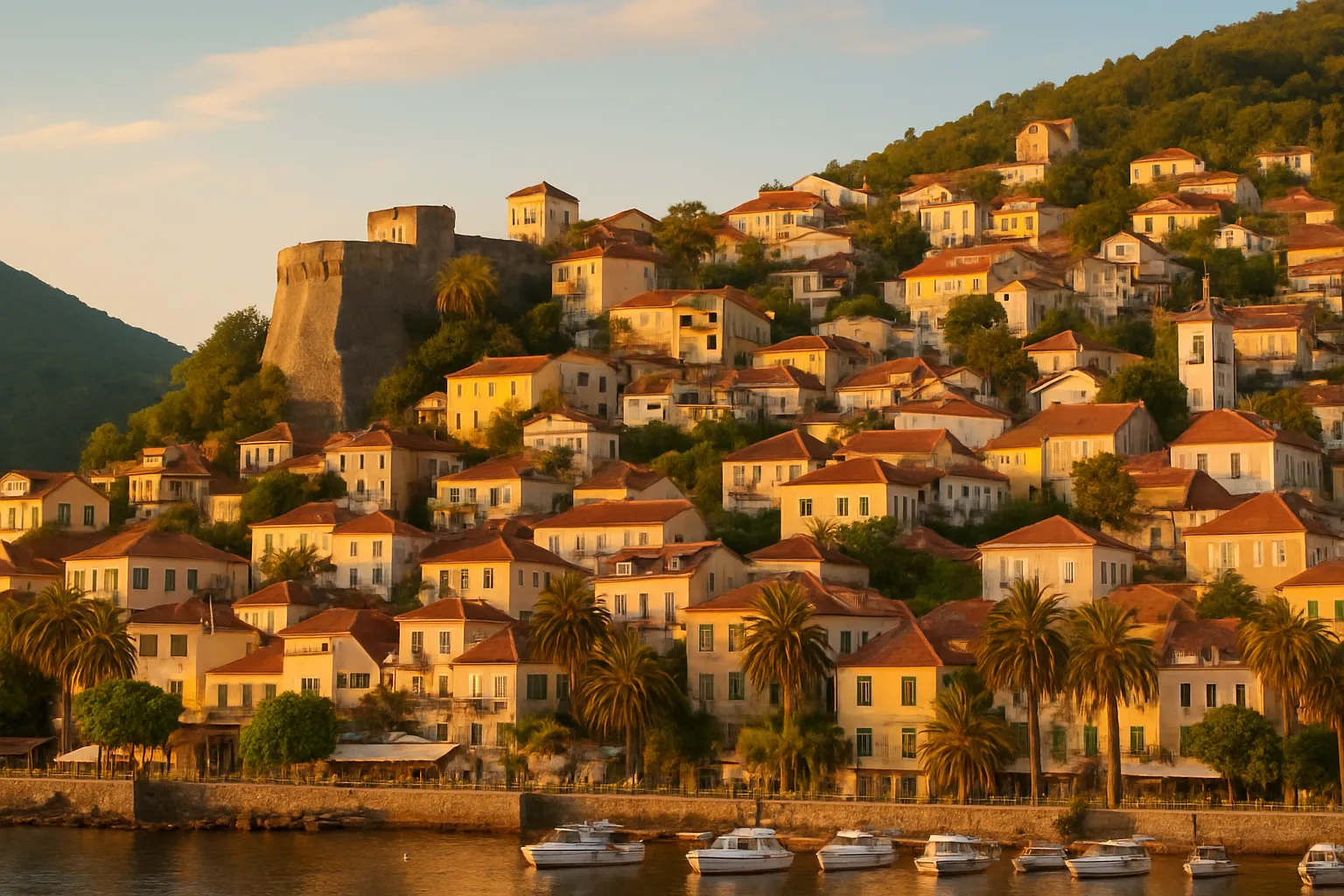
Rising terrain behind the coast — areas such as Rozino, Dubovica, and the slopes above the bypass road — offers detached villas and semi-detached houses with panoramic sea views. These properties typically deliver more indoor and outdoor space per euro spent than beachfront units, while remaining a short drive to beaches and amenities.
New-Development Units (Off-Plan and Newly Completed)
Several large-scale resort and residential developments operate in and around Budva. Buying from a developer on a new build means VAT applies rather than transfer tax (the two are mutually exclusive under Montenegrin law). Off-plan purchases can offer staged payment terms; buyers should conduct careful due diligence on the developer's track record and planning permissions before committing.
Commercial Property
Budva's high tourist footfall supports demand for retail units, restaurant premises, and small hotel or guesthouse assets. Commercial buyers should budget for separate legal and accounting advice on business licensing in addition to the standard property purchase process.
How Does the Buying Process Work in Montenegro?
Can Foreigners Buy Property in Budva?
Yes. Citizens of most countries may purchase property in Montenegro on terms broadly equal to local buyers. The main practical exceptions relate to agricultural land classified as forest or farmland — residential and commercial real estate is generally open to foreign ownership.
Step-by-Step Overview
- Property search and viewing. Identify shortlisted properties, arrange in-person or virtual viewings, and request the cadaster (land registry) extract to confirm ownership and encumbrances.
- Preliminary agreement (Predugovor). Buyer and seller sign a reservation contract; the buyer typically pays a deposit. A locally qualified lawyer should review this document before signing.
- Legal due diligence. Your lawyer verifies title, planning status, any mortgages or liens, and the property's record in the real estate cadastre held by the Real Estate Administration (Uprava za nekretnine).
- Final sale contract (Ugovor o kupoprodaji). Signed before a notary in Montenegro. The notary confirms identities, witnesses signatures, and submits the transfer for registration.
- Transfer tax payment. On secondary-market purchases, a progressive transfer tax applies: a lower rate on the portion of value up to €150,000, a mid rate on the portion between €150,000 and €500,000, and a higher rate above €500,000. New-build first sales from a VAT-registered developer are subject to VAT instead. Your notary or tax adviser will calculate the exact liability based on the assessed value.
- Registration. The buyer is registered as the new owner in the real estate cadastre, completing legal transfer of title.
Costs to Budget Beyond the Purchase Price
- Transfer tax (secondary market) or VAT already incorporated in developer price (new build)
- Notary fees
- State administrative fees for registration
- Lawyer's fee (strongly recommended for foreign buyers)
- Annual property tax set by Budva municipality (a percentage of the property's assessed value per year)
- Property management fees if the property will be rented in your absence
What Neighbourhoods Should Buyers Consider?
Stari Grad (Old Town): Character, history, and a captive rental market. Very limited supply keeps competition high.
Slovenska Obala / Beachfront Strip: The prime address for sea-view apartments and rental-income properties. Expect the highest asking prices per square metre in the city.
Bečići and Rafailovići: Immediately south of Budva, these resorts are effectively part of the wider Budva market. Slightly more relaxed pace, quality beach access, and a mix of older stock and newer complexes.
Residential Budva (Petrovac Road corridor, Rozino): Preferred by buyers seeking more living space, better parking, and a quieter neighbourhood feel while staying within easy reach of the centre.
Sveti Stefan vicinity: Technically a separate destination, but often searched alongside Budva. Ultra-premium coastal setting; limited availability.
What Should Buyers Know About Rental Income Potential?
Budva's summer season generates strong short-term rental demand. Well-located apartments with modern finishes, air conditioning, and proximity to the beach attract the highest occupancy. Buyers targeting rental income should factor in:
- Seasonal concentration: the majority of tourist nights fall in the summer months
- Property-management costs if you will not be on-site
- The requirement to register rental activity with Montenegrin tax authorities
- Competition from purpose-built aparthotel stock
Longer-term rentals to residents or professionals provide steadier year-round income at lower per-night rates; some investors combine both strategies.
Frequently Asked Questions
Do I need a lawyer when buying property in Budva?
It is not legally mandatory, but it is strongly advisable — especially for foreign buyers. A qualified Montenegrin property lawyer will verify title, review contracts, check for encumbrances, and ensure the transfer tax process is handled correctly. The cost is modest relative to the protection it provides on a significant cross-border purchase.
Is transfer tax the same as VAT on a new-build apartment?
No. These are two separate taxes, and under Montenegrin law only one applies to any given transaction. Secondary-market sales attract the progressive transfer tax. The first sale of a new-build unit by a VAT-registered developer is subject to VAT, and transfer tax is not charged on top.
Can I get a mortgage in Montenegro as a foreign buyer?
Some Montenegrin banks offer mortgage products to non-residents, but terms, eligibility criteria, and available loan-to-value ratios vary significantly by bank and by the buyer's country of residence. Many foreign buyers fund purchases with cash or finance from their home country. It is worth consulting a local bank and a financial adviser early in the process.
How long does the full purchase process take?
A straightforward secondary-market purchase — from signed preliminary agreement to registration as owner — commonly takes between four and eight weeks, assuming no complications with title or planning. Off-plan purchases follow a different timeline linked to the development's construction schedule and handover date.
Is Budva a good market for resale?
Budva has the most liquid resale market on the Montenegrin coast, supported by consistent buyer demand from multiple source markets and a well-established local agency network. Liquidity is strongest for well-located, well-maintained units in the mid-to-upper price range.
Internal Links
- Montenegro Property Buyer's Guide — Complete Overview
- Apartments for Sale in Budva — Current Listings
- Villas for Sale in Montenegro
- Montenegro Property Transfer Tax Explained
- Budva Rental Market — What Landlords Need to Know
This guide is provided for informational purposes. Tax rules, legal requirements, and market conditions change. Always obtain advice from a qualified Montenegrin lawyer and, where relevant, a tax professional before entering into any property transaction.
Find your place here
Browse apartments, houses and commercial property across Montenegro.
Browse listings