Buy property in Tivat, Montenegro: current prices (€1,500–€7,000+/m²), top neighbourhoods, Porto Montenegro, buying process, rental yields. Updated 2026.
Tivat is Montenegro's most glamorous property market — home to Porto Montenegro, one of the Mediterranean's premier superyacht marinas, and served by an international airport with direct flights to a dozen European cities. Apartments in Tivat sell for roughly €1,500–€7,000+ per m² depending on location and quality; well-positioned units in the marina district regularly generate gross rental yields of 5–8% in the tourist season.
Why Buy Property in Tivat?
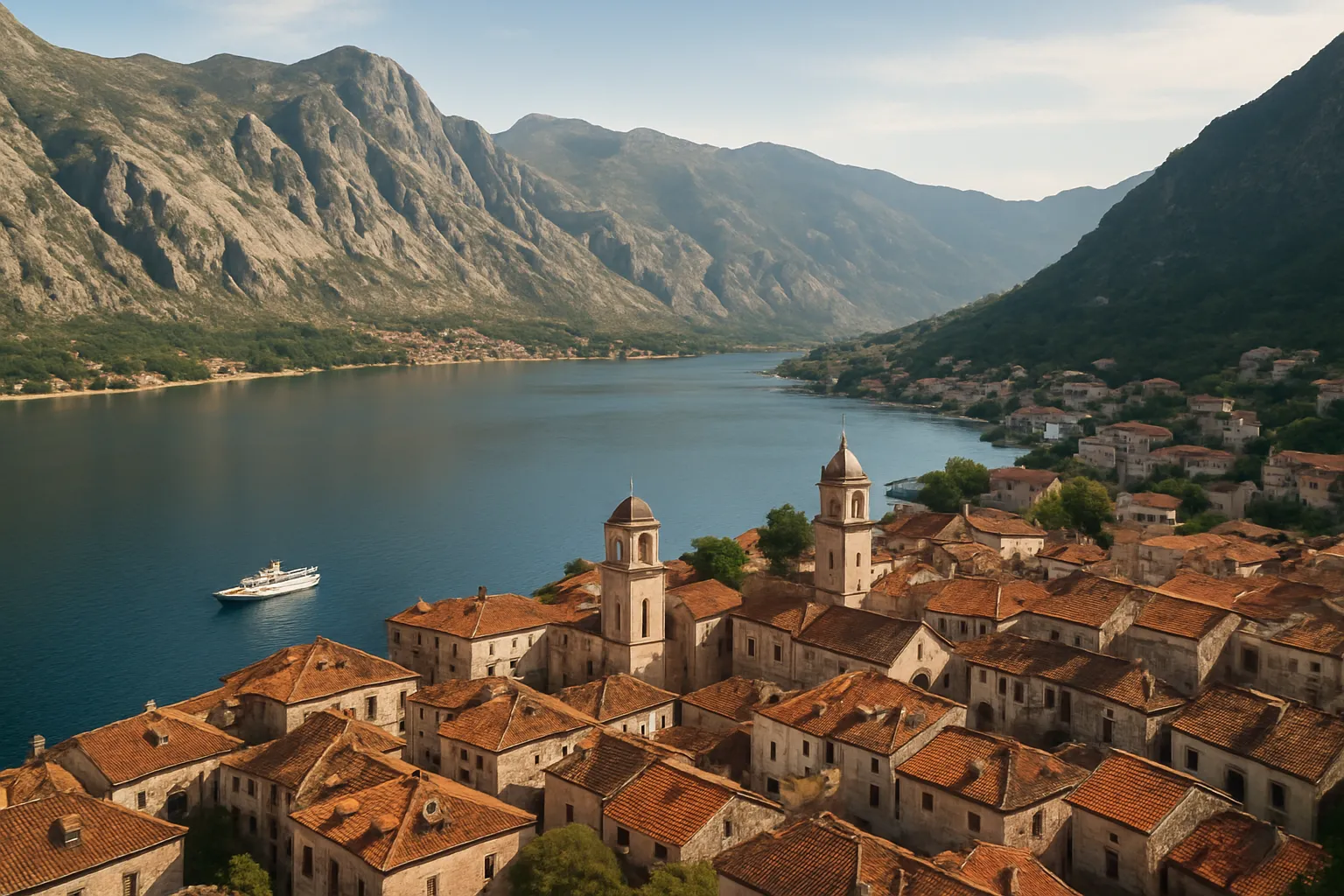
Tivat occupies a privileged position on the Bay of Kotor: compact, walkable, and sitting between the UNESCO-listed medieval city of Kotor (20 minutes by car) and the beaches of Budva (30 minutes). What sets it apart from every other Montenegrin coastal town is the Porto Montenegro effect — a billion-euro transformation of a former Yugoslav naval base into a world-class marina resort that has reshaped local property values and drawn an international community of yacht owners, retirees, and remote workers.
Key reasons foreign buyers choose Tivat:
- Porto Montenegro — the marina complex brings five-star hospitality, a yacht club, international schools, medical facilities, and curated retail to what was once a provincial town. Properties within and directly adjacent to the complex command a significant premium.
- Tivat International Airport — one of only two international airports in Montenegro, with seasonal and year-round connections to London, Vienna, Belgrade, Istanbul, and other hubs. Reaching the city centre from the terminal takes under ten minutes.
- Bay of Kotor setting — the sheltered bay means calm water, mild winters (average 13°C in January), and Mediterranean vegetation. The area is popular year-round, not only in summer.
- Short-term rental demand — Tivat's tourist season runs May through October, with Porto Montenegro and the marina drawing high-spending visitors who prefer quality apartments over hotel stays.
- Montenegro's EU candidate status — the country is in active EU accession negotiations, which underpins long-term legal and property-rights confidence for foreign investors.
Current Property Prices in Tivat
The Tivat market is genuinely segmented. Prices below are orientational — see current listings for the latest figures.
| Segment | Price range (€/m²) | Typical entry price |
|---|---|---|
| Older stock, non-central | 1,500 – 2,500 | From ~€50,000 (studio) |
| New-build, town centre | 2,500 – 4,000 | From ~€80,000 (1-bed) |
| Marina-adjacent, new-build | 3,500 – 5,500 | From ~€130,000 (1-bed) |
| Porto Montenegro complex | 5,000 – 7,000+ | From ~€250,000 (1-bed) |
| Detached house / villa (outskirts) | — | €200,000 – €800,000+ |
| Luxury villa (sea-view, pool) | — | €500,000 – €2,000,000+ |
New-build purchases directly from a VAT-registered developer are subject to 21% VAT — applied on the first sale only and typically embedded in the advertised price. Resale properties attract a progressive transfer tax instead — see the buying process section below.
Top Neighbourhoods in Tivat for Buyers
Porto Montenegro and the Marina Quarter
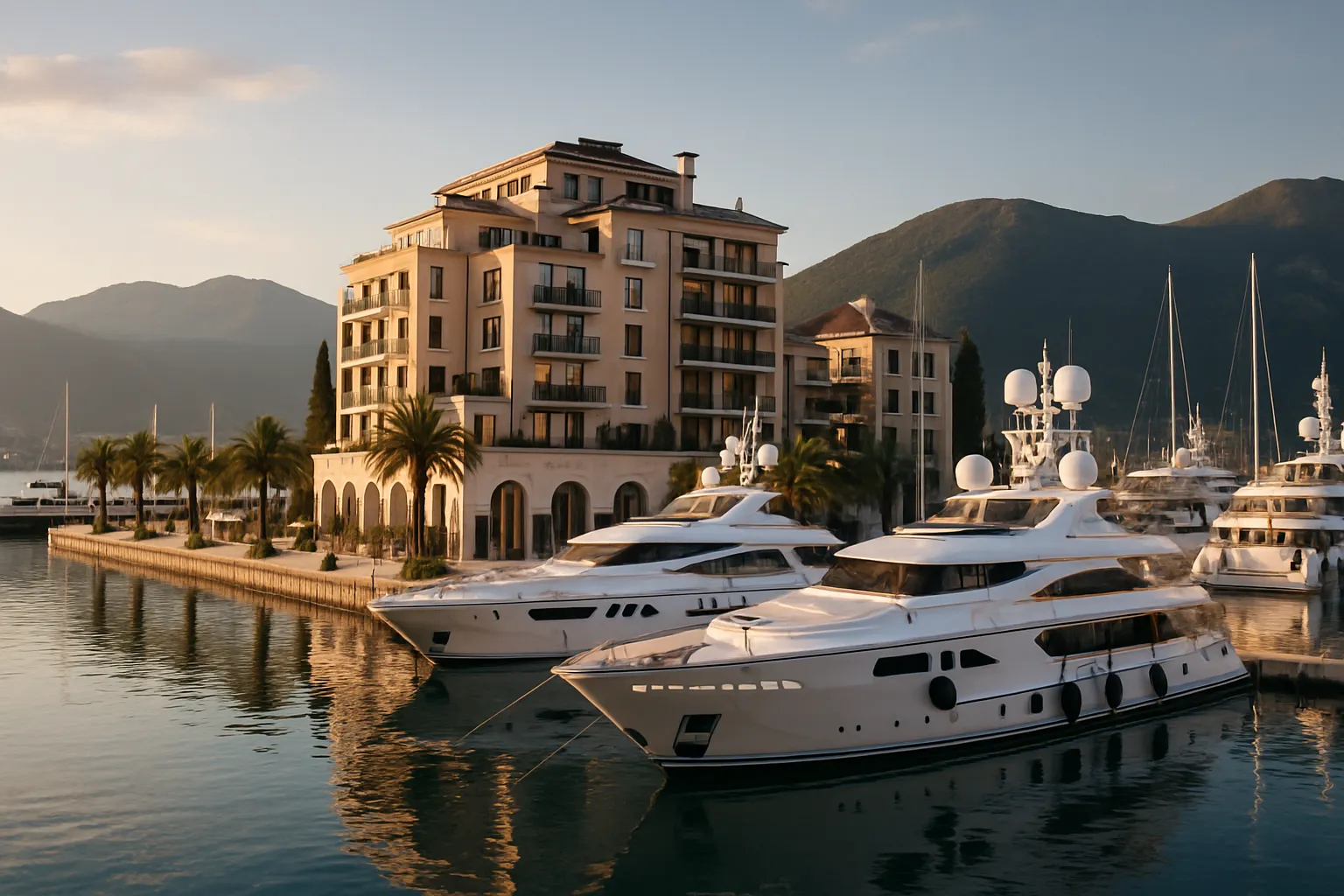
The marina complex is Tivat's international showcase. Turnkey apartments here come with concierge services, 24/7 security, a yacht berth marketplace, and access to hotels, restaurants, and the Porto Montenegro Yacht Club. The trade-off is price and the annual management/service charge that comes with a branded residence. Best suited to buyers who want hassle-free rental management or a lock-up-and-leave second home at the top of the market.
Tivat Town Centre
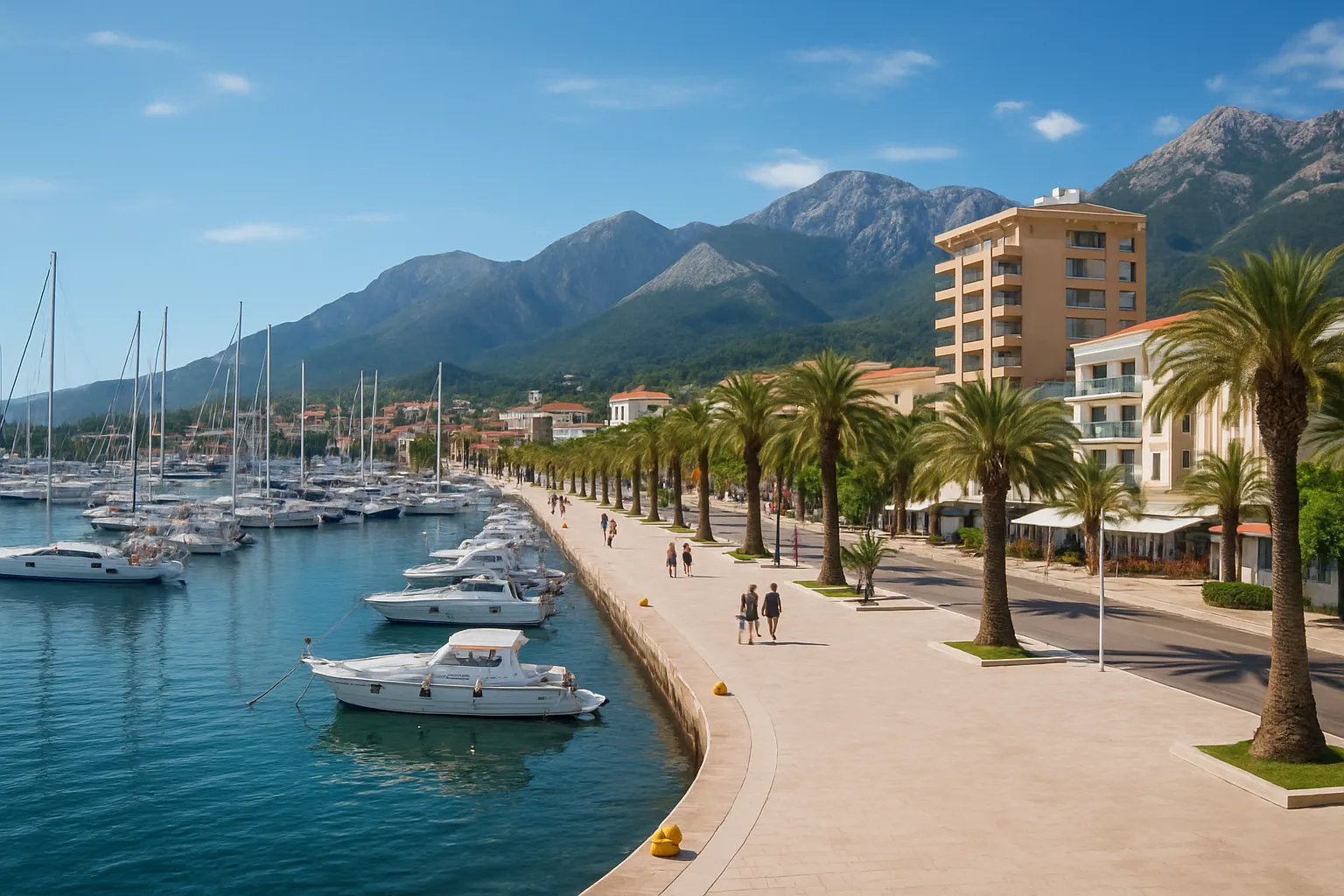
The walkable town grid — markets, cafes, the main pedestrian promenade (Riva), schools, and health facilities — makes the centre Tivat's best option for buyers who plan to live here year-round. New-build projects have added modern apartments in recent years at meaningfully lower price points than the marina. The seafront park and the pedestrian waterfront promenade give the centre a genuine quality of life that purely residential developments lack.
Donji Stoj and Lepetane
These quieter coastal settlements south of the town centre offer detached houses and smaller villa complexes with direct sea access and views across the Verige strait — the narrow passage that connects the Tivat and Kotor sub-bays. The atmosphere is more residential and private; commuting to Porto Montenegro takes ten to fifteen minutes by car. Popular with buyers looking for a full-time home rather than a short-term rental investment.
Gornji Tivat, Bogišići, and the Hillside Villages
The slopes of Mount Vrmac above the town offer larger plots, panoramic bay views, and substantially lower per-metre prices than the waterfront. These areas appeal to buyers building to a custom specification or seeking seclusion. Infrastructure and road access vary — check specifics before purchasing land here.
The Buying Process for Foreign Nationals
Montenegro places no nationality-based restrictions on foreigners buying residential or commercial property. The process mirrors a standard continental European transaction, with a notary at its centre.
Step 1 — Find the property and agree terms. Once you agree a price, a reservation agreement (predugovor) is signed and a 10% deposit paid. The deposit is non-refundable if you withdraw; if the seller pulls out, they owe you double the deposit. Do not sign without first seeing the cadastre extract.
Step 2 — Due diligence. Your lawyer checks the cadastre extract (list nepokretnosti) to confirm ownership, any mortgages or liens, and the land-use category (namjena). For new builds, they verify building permits and the use permit. They also request a debt-clearance certificate confirming no outstanding utility or municipal charges.
Step 3 — Notarised purchase contract. The main contract (ugovor o kupoprodaji) must be certified by a Montenegrin notary. Both parties sign in person or via a notarised power of attorney — practical for buyers completing remotely. The notary confirms identities and files the contract with the cadastre.
Step 4 — Pay taxes and transaction costs.
Montenegro introduced a progressive, marginal property transfer tax from 1 January 2024. The buyer pays, and the base is the Tax Administration's assessed market value (which may differ from the contract price). The tax must be paid within 15 days of the assessment notice. Transfer tax applies to resales only — the first sale of a new build by a VAT-registered developer is subject to 21% VAT instead (never both).
| Cost item | Amount |
|---|---|
| Property transfer tax (resale) — buyer pays | 3% on the first €150,000; €4,500 + 5% on the €150,000–€500,000 tranche; €22,000 + 6% on anything above €500,000. Base = Tax Administration assessed value. Pay within 15 days. Source: Law on Property Transfer Tax (in force 1 Jan 2024), confirmed by PwC Montenegro tax summaries. |
| VAT on new-build (first sale by VAT-registered developer) | 21% — instead of transfer tax, never both; typically embedded in the developer's advertised price |
| Notary fee | Regulated scale; typically €300–€1,000 depending on contract value |
| Cadastre registration fee | Minor administrative fee |
| Legal fees | 1–2% of purchase price (recommended) |
| Agent commission | 2–4% (confirm who pays — buyer, seller, or split) |
Total transaction costs on a resale: budget 5–8% on top of the purchase price.
Step 5 — Register at the cadastre. Your lawyer or the notary submits the ownership transfer to the Real Estate Administration (Uprava za nekretnine). Registration typically takes 2–6 weeks. You receive a new list nepokretnosti showing you as the registered owner — keep this document safely.
Taxes to Know After You Buy
Rental income tax. If you rent your Tivat property, rental income earned by individuals (including non-residents receiving Montenegro-source income) is taxed at a flat 15%. The taxable base is gross rental income minus a standard deduction of 30% for ordinary lets, or 50%–70% for tourism/short-term lets — or actual documented costs if higher. A municipal surtax of approximately 13% is charged on the tax amount itself. Short-term tourist letting requires registering the property as tourist accommodation and meeting fire-safety and habitability standards; guests must be registered with the authorities.
Capital gains tax. A flat 15% applies to the gain on disposal. Exemptions exist for your only or main residence, and for transfers between spouses or between parents and children. There is no holding-period rule that reduces or eliminates the rate.
Annual municipal property tax. An annual property tax (porez na nepokretnost) is levied by the municipality at rates of 0.25%–1.0% of assessed market value. Coastal, tourist, and secondary properties — including the Porto Montenegro area — fall in the upper part of that band.
Rental Yield and Investment Outlook
Tivat's position as Montenegro's premium address makes it one of the country's stronger rental markets. Indicative gross yields:
- Porto Montenegro district: 5–8% gross annually; high daily rates in season offset the higher purchase price. Management costs are also higher — factor in the service charge and management fee.
- Town-centre new-build: 5–7% gross; lower purchase price improves yield math; easier to self-manage.
- Detached villas, Donji Stoj / Lepetane: 4–6% gross; appeal to longer-stay guests who pay premium rates for privacy and sea access.
Yield figures above are market estimates based on typical occupancy and rates patterns — not guaranteed returns. Rental income tax, management fees, the annual service charge (where applicable), and void periods will all reduce your net yield.
Capital appreciation has been consistent in the premium segment over the past five years, driven by Porto Montenegro's continued development and steady foreign-buyer demand. The mid-market (town-centre new-build) has also appreciated, though less dramatically. The older secondary market is more price-sensitive and slower-moving.
Residency Through Property Ownership
Owning property in Montenegro does not automatically grant residency. Property ownership can support an application for a temporary residence permit (privremeni boravak), issued for one year and renewable annually, subject to the following rules:
- From 17 January 2026, third-country nationals (non-EU/EEA/Swiss) must own property with a Tax Administration assessed value of at least €150,000 to qualify for this route. The threshold is based on assessed value — not the contract price.
- No minimum value applied before that date. Permits issued under the old rules are grandfathered.
- EU, EEA, and Swiss nationals are exempt from the €150,000 threshold.
- The owner must hold at least a 50% share and the property must be debt-free.
This is temporary residence only — not a path to citizenship. Montenegro's citizenship-by-investment programme closed on 31 December 2022. The 2026 rule is confirmed by IMI Daily and BDK Advokati reporting.
What to Check Before You Buy in Tivat
- Registration status. A portion of Montenegro's older building stock — and some newer construction — was built without permits or has never been formally registered. Buying an unregistered property means you do not legally own it until legalisation is completed. Always confirm registration (uknjižba) status before signing anything.
- Porto Montenegro vs. adjacent. Properties marketed as being "near Porto Montenegro" may be ten minutes' walk from the marina gates. Verify the exact address and what the complex access covers.
- Service charges. Marina-district apartments carry ongoing annual management and service fees that reduce net yield and add to the total cost of ownership. Ask for the current schedule before agreeing a price.
- Municipal utility infrastructure. Some peri-urban and hillside zones have older or incomplete water and sewage connections. Have a local engineer inspect before committing, especially for standalone houses.
- Seasonal character. Tivat is lively from May to October and quieter in winter. If year-round life matters to you, visit outside peak season before buying.
FAQ
Can foreigners buy property in Tivat?
Yes. Montenegrin law grants foreign individuals the same property-purchase rights as citizens for residential and commercial property. The only meaningful restriction is on agricultural land, which foreign individuals cannot purchase directly — a locally registered company (d.o.o.) is the standard workaround.
What is the total cost of buying a €250,000 apartment in Tivat?
For a resale apartment at a Tax Administration assessed value of €250,000, the transfer tax works out to: €4,500 (flat on the first €150,000 at 3%) + 5% on the remaining €100,000 = €4,500 + €5,000 = €9,500. Add €2,500–€5,000 for notary and legal fees, plus agent commission if applicable. Total acquisition cost: approximately €262,000–€265,000 before any renovation.
Does buying property in Montenegro give residency?
Not automatically. Property ownership can support an application for a temporary residence permit (privremeni boravak), renewed annually. From 17 January 2026, third-country nationals must own property with a Tax Administration assessed value of at least €150,000 to use this route. EU/EEA/Swiss nationals are exempt from the threshold. This is temporary residence — not citizenship. Montenegro's citizenship-by-investment programme closed on 31 December 2022.
How long does the buying process take?
From signed reservation to registered ownership: typically 6–12 weeks. The due diligence and contract preparation phase takes 1–3 weeks; notary certification is usually done in a single appointment; cadastre registration takes 2–6 weeks once the file is complete.
Do I need to be in Montenegro to buy?
No. You can grant a notarised power of attorney (punomoć) to your lawyer, who then signs all documents on your behalf. Many buyers from the UK, Russia, and the Middle East complete the transaction remotely. A physical visit to see the property before committing is strongly recommended regardless.
Is there an annual property tax?
Yes. Tivat municipality levies an annual property tax (porez na nepokretnost) at 0.25%–1.0% of assessed market value. Coastal, tourist, and secondary properties — including the Porto Montenegro area — fall in the upper part of that band.
Price ranges in this guide are orientational. See current listings for up-to-date figures.
Find your place here
Browse apartments, houses and commercial property across Montenegro.
Browse listings