Kotor is one of Montenegro's most sought-after locations for residential and investment property, combining UNESCO-listed Old Town charm with strong rental demand and a growing international buyer base. Whether you are looking for an apartment in the walled city, a seafront villa on the bay, or a commercial space in the tourist belt, this guide covers what you need to know before you buy.
Why Do Buyers Choose Kotor for Property?
Kotor's appeal is straightforward: a compact medieval core, some of the most dramatic fjord-like scenery in the Adriatic, and year-round accessibility via Tivat Airport just across the bay. International buyers — from Western Europe, the UK, Russia, Ukraine, and the Gulf — consistently rank Kotor among Montenegro's top three residential markets alongside Budva and Tivat.
The demand mix is broad. Short-term rental investors target the Old Town and the waterfront for peak-season income. Lifestyle buyers seek village houses on the hillsides above the bay for privacy and views. Long-term residents and remote workers gravitate toward newer apartment buildings in Dobrota and Muo, where parking and modern amenities are more realistic.
What Types of Property Are Available in Kotor?
Old Town Apartments and Townhouses
The walled Old Town (Stari Grad) contains a limited stock of stone apartments and multi-storey townhouses, most in buildings several centuries old. Renovation requirements are strict — the Heritage Protection Authority must approve any structural or façade changes — so buyers should budget for extended permitting timelines and specialist contractors. Supply is genuinely constrained, which supports values, but liquidity is lower than in newer developments.
Seafront and Waterfront Properties
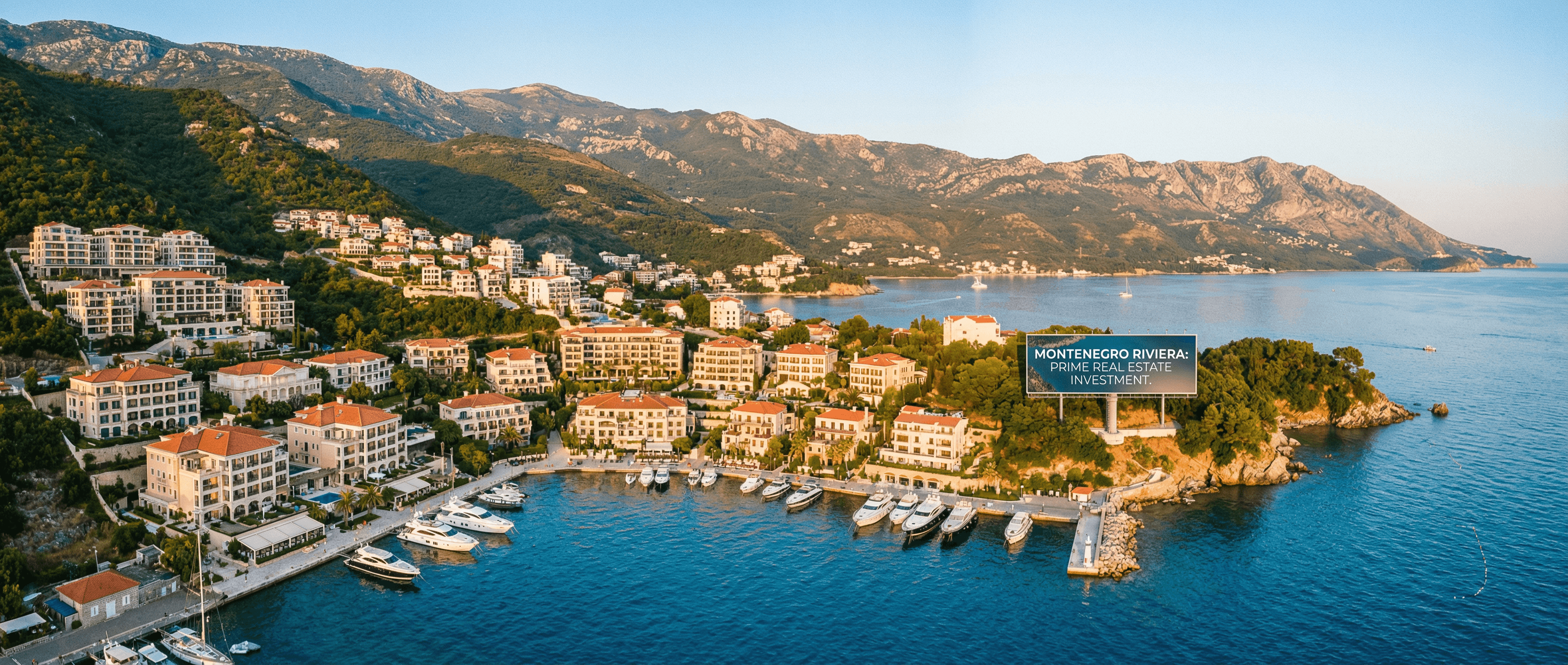
The coastal road running from Kotor through Dobrota, Orahovac, Prčanj, and into Tivat Bay hosts some of Montenegro's most premium residential stock. Waterfront villas and apartments command a significant premium over comparable inland units. Prices vary widely based on exact water frontage, build quality, and plot size — prospective buyers should request current valuations from a local agent rather than relying on advertised asking prices alone.
Village and Hillside Houses
The villages above Kotor — Špiljari, Gornji Stoliv, and the Vrmac peninsula — offer traditional stone houses, often partially ruined, at a broad range of entry points. Renovation projects here can deliver high-quality private retreats, but road access, utility connections, and planning consent all need careful due diligence before purchase.
New-Build Developments and Off-Plan
Several developers are active around Kotor municipality, particularly in lower-density areas where planning is more flexible. New builds are subject to VAT at 21% on the first sale from a VAT-registered developer; in this case no property transfer tax applies — it is VAT or transfer tax, never both. Off-plan purchases require a developer track record check and a well-structured reservation and purchase agreement reviewed by a Montenegrin attorney.
Commercial Property
Kotor's tourist footfall supports demand for retail units, restaurants, and small hotels in and around the Old Town. Commercial transactions involve additional due diligence around zoning, licences, and permitted use — engage a local lawyer with commercial property experience.
How Does Buying Property in Kotor Work for Foreign Nationals?
Montenegro operates a broadly open framework for foreign buyers. Citizens of most countries can purchase residential and commercial property in their own name, with the same ownership rights as Montenegrin nationals. The main practical steps are:
- Agree heads of terms and pay a reservation deposit (commonly formalised by a preliminary contract).
- Conduct due diligence — title search at the Land Registry (Uprava za nekretnine), check for encumbrances, verify planning status, confirm seller's ownership chain.
- Sign the main purchase-sale agreement before a notary. Notarisation is mandatory.
- Pay transfer tax on secondary-market purchases. The rate is progressive: 3% on the portion of assessed value up to €150,000; 5% on the portion between €150,000 and €500,000; and 6% on any amount above €500,000. The buyer pays.
- Register title at the Land Registry. Registration typically takes several weeks from submission.
Foreign buyers who purchase through a company structure rather than personally should take separate legal advice, as corporate ownership introduces different tax and reporting obligations.
What Are the Ongoing Costs of Owning Property in Kotor?
Annual property tax (porez na nepokretnost) is set at the municipal level and falls within a range of 0.25% to 1% of the assessed value per year, depending on the municipality's decision and property category. Kotor municipality sets its own rate within that band.
Additional running costs typically include building maintenance fees (for apartments in managed blocks), utility connections (electricity, water), and — if renting — registration with the Tourism Inspection and tax compliance on rental income. Rental income from property in Montenegro is subject to income tax; rates and allowable deductions depend on whether you file as an individual or through a legal entity.
If you sell later, capital gains are taxed at a flat rate on the profit (sale price minus acquisition cost and allowable improvements). Rates are set in the personal income tax law and should be confirmed with your tax adviser at the time of sale, as legislation can change.
What Should Buyers Know About the Kotor Rental Market?
Kotor operates a pronounced seasonal rental curve, with peak demand concentrated in summer. The Old Town and waterfront attract the highest short-let rates and occupancy in season. Off-season occupancy depends heavily on property quality, marketing reach, and proximity to year-round amenities.
Long-term rental demand from expats, remote workers, and service industry staff provides a steadier but lower-yield baseline. Buyers targeting rental income should model both scenarios and factor in platform fees, property management costs, and the registration obligations Montenegro imposes on tourist accommodation providers.
How Do Property Prices in Kotor Compare Across the Bay?
Kotor is consistently one of Montenegro's higher-priced markets. Within the municipality, location drives significant variation: Old Town and direct waterfront properties trade at a notable premium over hillside villages or apartments further from the coast. Dobrota — immediately north of the Old Town along the bay road — has emerged as a popular mid-market option combining proximity to Kotor with more modern residential stock.
For current market pricing, request a property valuation or shortlist from a local agent; published listings give a directional sense of the market but asking prices and achieved prices often differ, particularly in the premium segment.
FAQ
Q: Can a non-EU citizen buy property in Kotor? A: Yes. Montenegro is not an EU member state, and its property law generally permits foreign nationals from most countries to purchase residential and commercial real estate directly in their own name, subject to standard due diligence and notarised sale procedures.
Q: Is there a minimum purchase price or investment threshold for residency? A: Montenegro does not currently link a straightforward property purchase to automatic residency rights in the way some other programmes do. Residency options exist (temporary residency based on property ownership is one route), but the conditions and documentation requirements should be confirmed with an immigration lawyer, as rules evolve.
Q: Do I need a Montenegrin lawyer to buy property in Kotor? A: It is strongly advisable. A lawyer conducts the Land Registry title search, reviews the purchase contract, advises on tax obligations, and manages the notarisation process. Given the YMYL nature of a cross-border real estate transaction, independent legal representation is not a step to skip.
Q: How long does the buying process typically take? A: For a straightforward secondary-market purchase with clear title, the process from signed preliminary contract to completed Land Registry registration commonly takes between four and ten weeks, though Old Town heritage properties and off-plan deals can take longer.
Q: Are there restrictions on buying in the Old Town? A: Ownership itself is open to foreign buyers. However, any renovation, structural alteration, or façade change in the UNESCO-protected Old Town requires approval from the heritage protection authorities, which adds time and specialist costs to renovation projects.
Internal links and related reading: