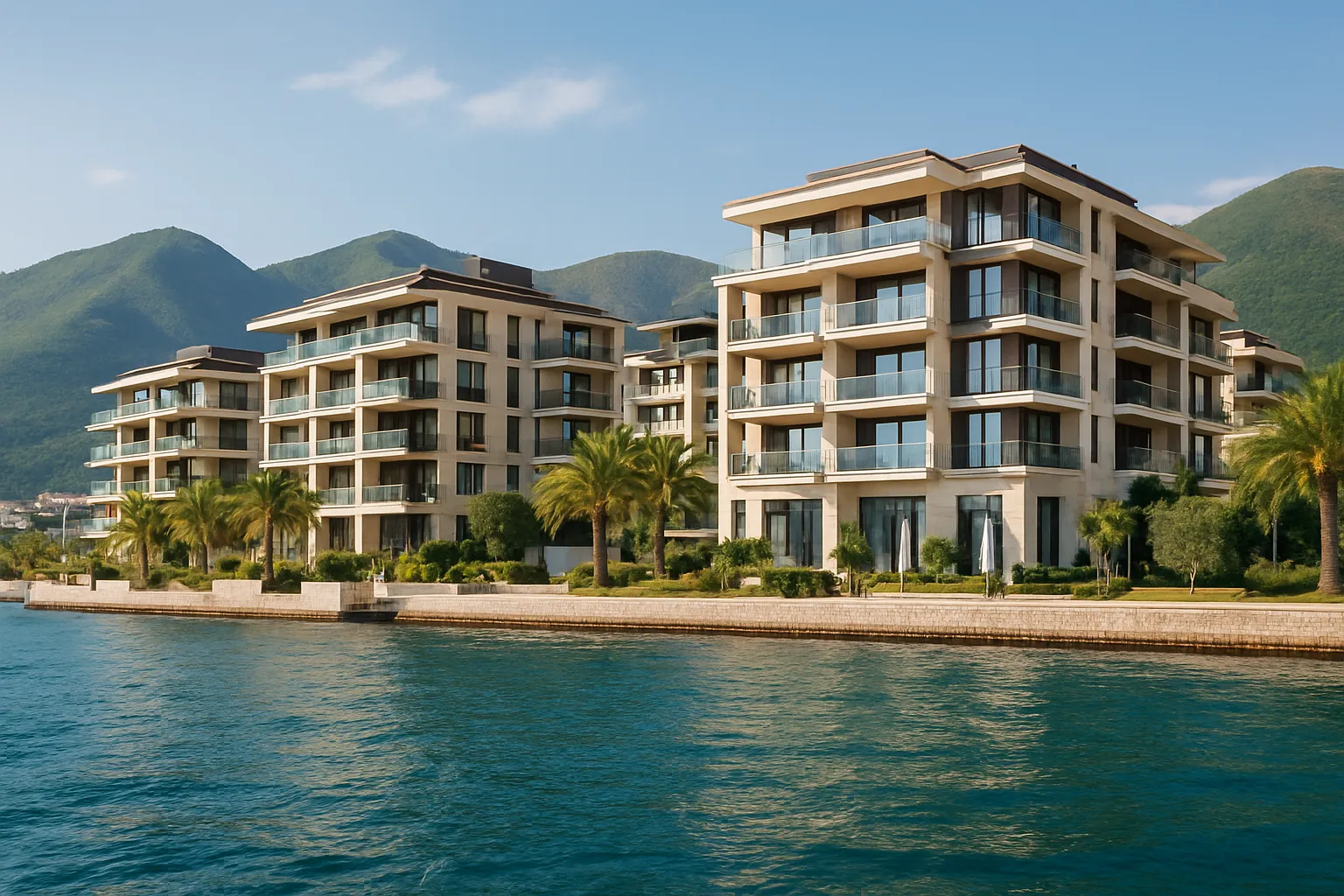
Montenegro's coastal and urban rental market offers some of the more compelling yield potential in the broader Mediterranean region — gross rental yields on well-located apartments typically range from the mid-single digits to the high single digits annually, with short-term coastal lets often outperforming long-term city rentals during peak season.
Why Montenegro Attracts Yield-Focused Buyers
Montenegro punches above its weight for a country of its size. Tourism arrivals have grown consistently over recent years, a new motorway has cut drive times between the coast and the capital, and the country's EU accession process continues to advance. For a foreign buyer, this combination of rising visitor numbers, a relatively low entry price point compared with Croatia or Greece, and a straightforward property purchase process creates a credible case for rental income alongside capital appreciation.
Before diving into city-level dynamics, two structural points matter for every ROI calculation:
- Transfer tax is progressive on secondary-market purchases: 3% on the assessed value up to €150,000, 5% on the portion between €150,000 and €500,000, and 6% on any value above €500,000. This is a buyer cost that affects your initial outlay and therefore your net yield.
- New-build purchases from a VAT-registered developer attract 21% VAT instead — there is no transfer tax in that case. Understanding which regime applies changes your break-even timeline materially.
- Annual property tax is set at the municipal level and runs between 0.25% and 1% of the assessed value per year — factor this into your running costs.
How Are Gross and Net Yields Calculated Here?
Gross yield = annual rental income ÷ purchase price × 100.
Net yield subtracts vacancy, management fees (typically charged as a percentage of rental income by local agencies), maintenance, utilities during void periods, property tax, and any accountancy costs for declaring rental income.
In Montenegro, short-term rental income must be declared. Capital gains on resale are taxed at a flat rate, so a full ROI model needs to account for both the income phase and the exit.
A useful rule of thumb: if a property's gross yield looks attractive, expect net yield to be meaningfully lower once all running costs are included — the gap between gross and net is wider for short-term furnished holiday lets (more management, more turnover, more maintenance) than for unfurnished long-term residential lets.
City-by-City Rental Yield Overview
Budva: Highest Short-Term Potential, Compressed by Price
Budva is Montenegro's primary tourist hub and commands the highest short-let nightly rates on the Adriatic coast. One- and two-bedroom apartments close to the Old Town or the Slovenska Plaža strip rent for strong seasonal premiums during the summer months.
The catch: Budva also has the highest purchase prices on the coast, so the yield calculation is tighter than the headline nightly rates suggest. Properties here work best as short-term holiday lets managed through an agency; the season is concentrated, meaning a large share of annual income is earned in a short window. Buyers who self-manage or use a local operator efficiently tend to outperform those who rely on OTA platforms alone.
Best-fit investor profile: buyers comfortable with seasonal concentration and willing to invest in furnishing and management.
Kotor: Premium Pricing, Lifestyle Demand, Steady Occupancy
Kotor's UNESCO Old Town commands a premium that reflects genuine scarcity — there is a limited supply of legal short-term rental units inside the walls and in the immediate bay-front zones. This scarcity supports occupancy and nightly rates, though purchase prices reflect the same dynamic.
The Bay of Kotor also draws a longer season than pure beach destinations, partly because of its scenic, non-beach appeal (sailing, cycling, cultural tourism). Investors here often report more stable year-round demand than in purely summer-driven markets, though peak-season income still dominates.
Best-fit investor profile: buyers prioritising asset quality and some year-round tenancy over maximum gross yield.
Tivat & Porto Montenegro: Upscale Marina Market
Tivat has transformed since the Porto Montenegro superyacht marina development. The area attracts a high-net-worth visitor and resident base, which supports premium nightly and monthly rates. Entry prices reflect this positioning — this is the most expensive per-square-metre market on the coast for marina-adjacent stock.
Yields here are less about a high percentage return and more about absolute income on a quality asset with strong resale liquidity. Long-term corporate lets and yacht crew accommodation also create a niche demand layer that is less seasonally volatile than holiday lets.
Best-fit investor profile: buyers with a higher acquisition budget who value capital preservation and brand-name address over percentage yield.
Bar & Ulcinj: Emerging Coastal Markets with Higher Yield Headroom
Bar and Ulcinj sit further south and currently trade at noticeably lower price points than Budva or Kotor. Rental demand is growing — Bar is a functioning port city with year-round economic activity, while Ulcinj is developing its long-beach tourism offer. Because entry prices are lower, gross yields can be meaningfully higher on paper.
The trade-off is liquidity: resale takes longer, the international buyer pool is smaller, and management infrastructure is less developed. Net yields depend heavily on the owner's ability to source and retain good tenants or run short-let operations effectively.
Best-fit investor profile: yield-focused buyers willing to accept lower liquidity and take a longer-horizon view on capital growth.
Podgorica: Capital City Long-Let Market
Montenegro's capital does not have coastal appeal, but it has a stable year-round rental market driven by professionals, expats, and domestic long-term tenants. Long-term residential lets in Podgorica offer predictable monthly income with lower management overhead than holiday lets.
Purchase prices in Podgorica are generally lower than prime coastal locations, which means the yield-on-price ratio can be competitive for long-term lets, even if absolute nightly income is obviously absent. The city also benefits from infrastructure investment and the growing presence of international businesses.
Best-fit investor profile: buyers who prefer passive, stable income over seasonal management complexity.
What Actually Moves Your Net ROI?
Across all locations, the variables that most directly determine whether a Montenegro investment performs as modelled are:
- Purchase structure — secondary market vs. new-build (VAT vs. transfer tax), and whether you negotiate effectively on price.
- Management quality — a well-run short-let property in Budva outperforms a poorly managed one by a wide margin. Choose your operator carefully.
- Furnishing and fit-out — guests and tenants pay a premium for well-presented spaces; the cost of a quality fit-out is typically recovered within a reasonable number of seasons.
- Seasonality management — extending the shoulder season through spring and autumn bookings materially improves annual yield on coastal assets.
- Exit planning — capital gains tax applies on resale. A property held for a longer period and sold at a meaningful premium will deliver a materially better total return than a short flip, particularly after transfer costs at entry.
Frequently Asked Questions
Can foreign buyers own rental property in Montenegro?
Yes. Foreign nationals can purchase and own residential and commercial property in Montenegro with the same ownership rights as citizens, with the exception of agricultural land in certain categories. There are no restrictions on renting out owned property.
Do I need to register rental income in Montenegro?
Yes. Rental income earned in Montenegro is taxable and must be declared. Tax residents and non-residents have different reporting obligations, so working with a local accountant or tax adviser from the outset is strongly recommended.
What costs should I budget for beyond the purchase price?
Beyond the transfer tax (or VAT on new builds), typical additional costs include notary fees, property registration fees, legal representation, and any agency transaction fee. Ongoing costs include annual property tax, management fees, maintenance, and income tax on rental receipts.
Is short-term letting (Airbnb-style) legal and regulated?
Short-term holiday letting is legal and practised widely on the Montenegrin coast. Operators are expected to register guests with the relevant local authorities. Regulations have been tightening gradually in line with broader Adriatic-region trends, so verifying current local requirements before launching a short-let operation is advisable.
Which city offers the best rental yield overall?
There is no single answer — it depends on your budget, risk tolerance, and management capacity. Coastal cities like Budva and Kotor offer strong income potential but require active management and carry higher entry prices. Emerging markets like Bar and Ulcinj offer higher yield headroom at lower cost but less liquidity. Podgorica suits passive long-let investors. A conversation with a local adviser who knows the current market is the most reliable path to an honest yield estimate for a specific property.
Looking to explore specific properties or get a more detailed return projection for a particular location? Browse our current listings or speak with our local team.